





Sponsored content
BazaarLink
BazaarLink is an OpenAI-compatible AI API gateway: one key for 140+ AI models, pay as you go, with budget limits.
bazaarlink.aiVisit sponsor ↗Claude Code mods, plugins, skills, hooks, status lines and MCP servers. Browse community builds with original sources and L0–L3 permission levels.
13 projectsBazaarLink is an OpenAI-compatible AI API gateway: one key for 140+ AI models, pay as you go, with budget limits.
bazaarlink.aiVisit sponsor ↗
A Claude Code plugin that intercepts Bash tool calls and forces an explicit user dialog before any command that changes the machine (sudo, brew install, global config writes), even in auto mode, with per-project ask/block rules.

A pane of what this machine lets Claude do, read from settings.

A Claude Code mod that previews the blast radius of destructive Bash commands when they ask for permission: rm targets measured (files, size, what git can't restore) plus user-defined regex -> dry-run rules, shown as a line under the dialog with details in a side pane. Display only: it never changes the permission decision.
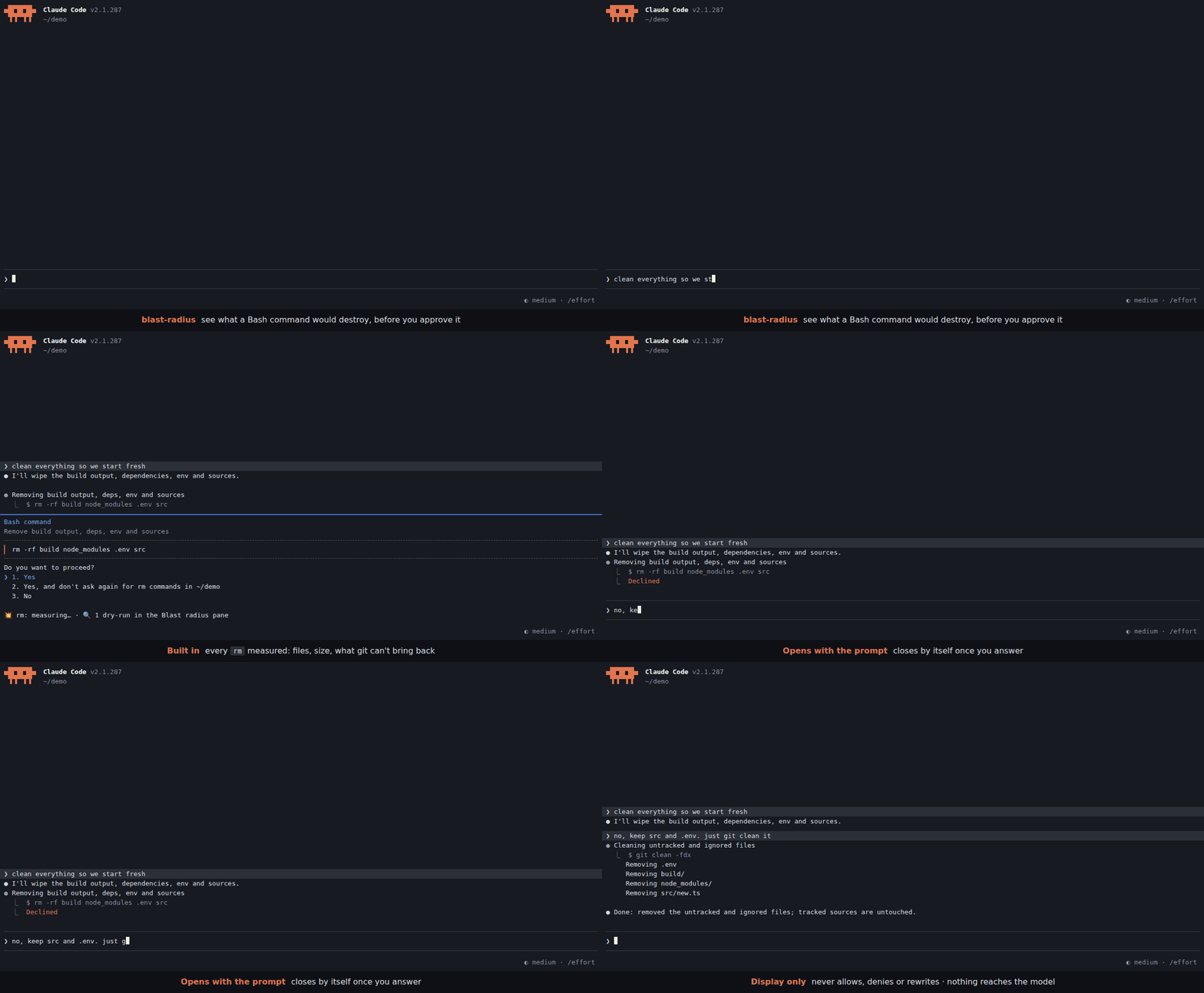
BazaarLink is an OpenAI-compatible AI API gateway: one key for 140+ AI models, pay as you go, with budget limits.
bazaarlink.aiVisit sponsor ↗Project Sentinel keeps long Claude Code runs on track: a status bar, the Control Room panel, Context Autopilot (automatic handoff to a fresh context), Cache Guardian (the prompt cache in view, kept warm on request), permission categories that ask or deny, a run chain, Frontier Max, a lazy-exit guard, a model router, subagent limits, Focus view, machine load and Kit, an optional pixel companion.
The useful detail in this Claude Code mods catalogue is the permission map: for each mod, it records what it can read, write, run, or send over the network. That’s the kind of context you want before installing a hook. https://t.co/B7yVuK0rrQ
Challenge: 100 Consecutive Days of Sharing Claude Code Tips Day 45 | Ask It to Make a Mod with One Sentence This week Claude Code's mods videos keep getting shared, and yesterday I also spent a while asking it "what exactly are mods." To put it plainly, a mod is a small program that runs inside Claude Code: it can add a line of information above the input box, open a panel on the side, or add your own /command. And you don't have to write it yourself—just say what you want: Make a mod that shows the current git branch above the input box It will write the file into ~/.claude/dev-mods/, then ask whether you want to enable hot reload for this session. Choose Enable for this session, and it will appear after this run finishes. If you don't like it, keep talking, and it will auto-reload after changes. Two pitfalls. The mod it writes only lives in this one conversation. If you want to keep it, move that folder out, and later start it with claude --plugin-dir plus that path. Also, a mod is a program running with your permissions, so it can read your files and keys. If someone else shares one, review it before installing.

Clickable safety rules for Claude Code: block rm -rf, force-push, mass kubectl deletes, secret file access, sudo and network calls, with presets and jail-to-project modes.

Asks before chmod makes files world-writable (777, a+w, o+w) or chmod or chown runs recursively on a broad path (/, a system folder, a home folder).
Track what your AI coding tools cost
syrtis.nyanako.comVisit sponsor ↗A CLAUDE CODE MOD CAN READ YOUR API KEYS AND APPROVE COMMANDS BEFORE YOU SEE THEM. HERE'S HOW TO CHECK ONE IN 30 SECONDS.

A tally of this session's permission checks: what was allowed, what you were asked about and what was denied.

Put this Claude Code session on a full-duplex voice call. You talk while it codes, interrupt it at any time, and hear results read back. A spoken "yes" never approves anything: permission prompts stay on your keyboard. macOS only.

A Claude Code mod that makes Claude ask before it touches your database migrations.