
madjagstudios@madjagstudios
madjagstudios/grounded-engineering/tree/main/plugin
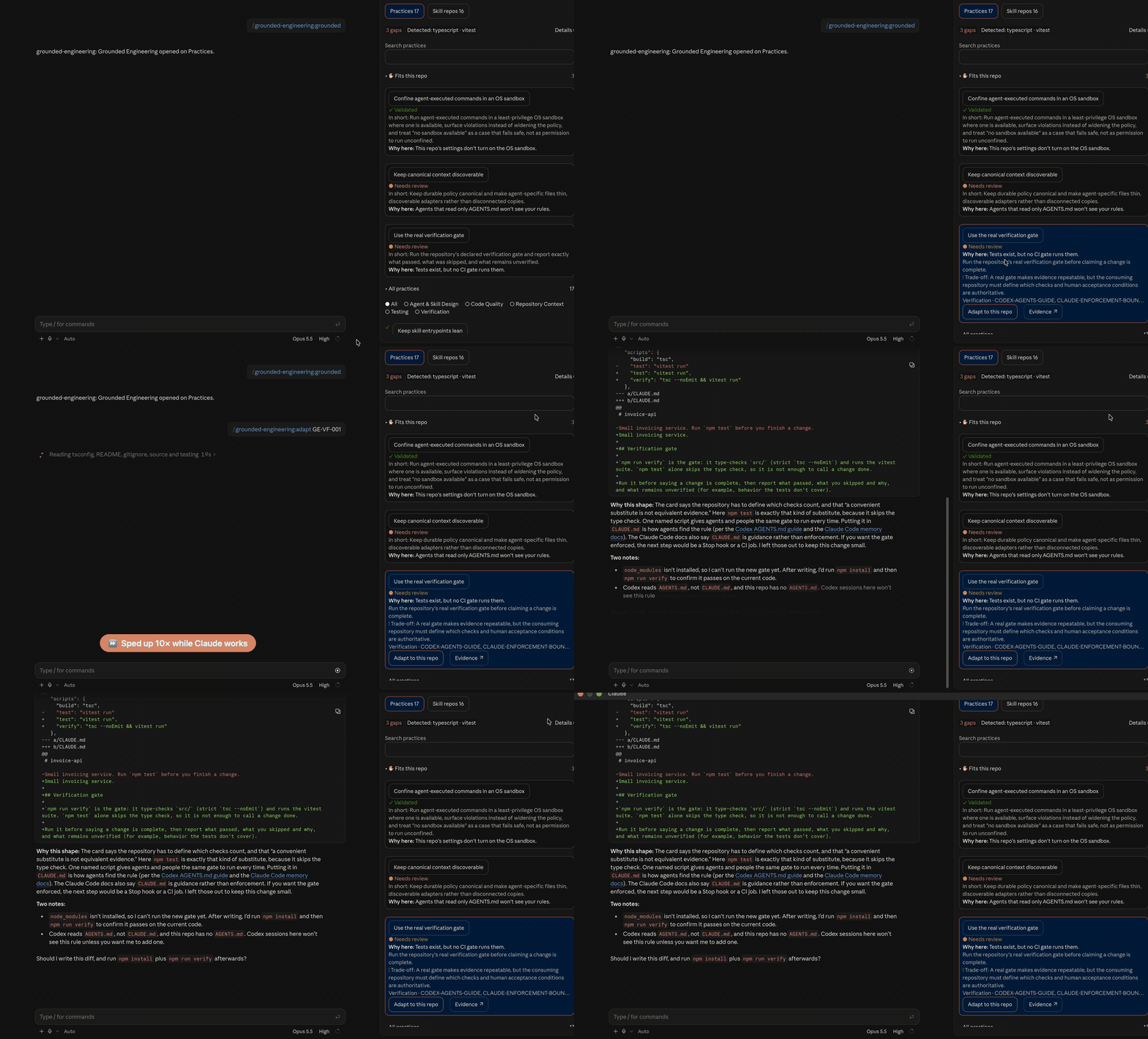
Source-backed engineering practices and reviewed skill repositories, in a Claude Code pane.
madjagstudios/grounded-engineering/tree/main/plugin
Engineering practices drawn from mature open-source repositories, each tied to the source it came from, plus a shelf of reviewed third-party skill repositories. Runs as a mod inside Claude Code, a live pane installed as a plugin, and as a command-line tool. Type /grounded and the pane reads the repository you have open, showing practices that fit (tests with no CI gate, agent instructions only Claude reads, no OS sandbox) with reasons and pinned source links. Adapt asks Claude to propose the smallest change; nothing is written until you approve. Also lists sixteen third-party skill repositories read at pinned commits with an Explain install flow, and provides an adopt command-line tool writing managed blocks into AGENTS.md, CLAUDE.md or neutral Markdown.
Check the author's README for the marketplace and plugin name first. Commands may change as the repository evolves.
claude plugin marketplace add madjagstudios/grounded-engineering
claude plugin install grounded-engineering@grounded-engineering


Engineering practices drawn from mature open-source repositories, each tied to the source it came from, plus a shelf of reviewed third-party skill repositories. It runs as a mod inside Claude Code, a live pane installed as a plugin, and as a command-line tool.
Type /grounded and the pane reads the repository you have open. It shows the
practices that fit what it finds (tests with no CI gate, agent instructions
only Claude reads, no OS sandbox) and why each one applies. Adapt asks
Claude to propose the smallest change that brings the practice into your
repository; nothing is written until you approve it. Every card links to the
sources it was drawn from, pinned to the revision that was read.
Needs Claude Code 2.1.288 or later, in the terminal or the desktop app's Code tab. Mods install as plugins:
/plugin marketplace add madjagstudios/grounded-engineering
/plugin install grounded-engineering@grounded-engineering
Then type /grounded. In the terminal the pane also has keyboard shortcuts:
1 and 2 switch screens, d shows what it detected, and a runs the open
card's main action.
Needs Node.js 20 or later. It writes the same practices into AGENTS.md,
CLAUDE.md or a neutral Markdown file; see Adopt a profile.
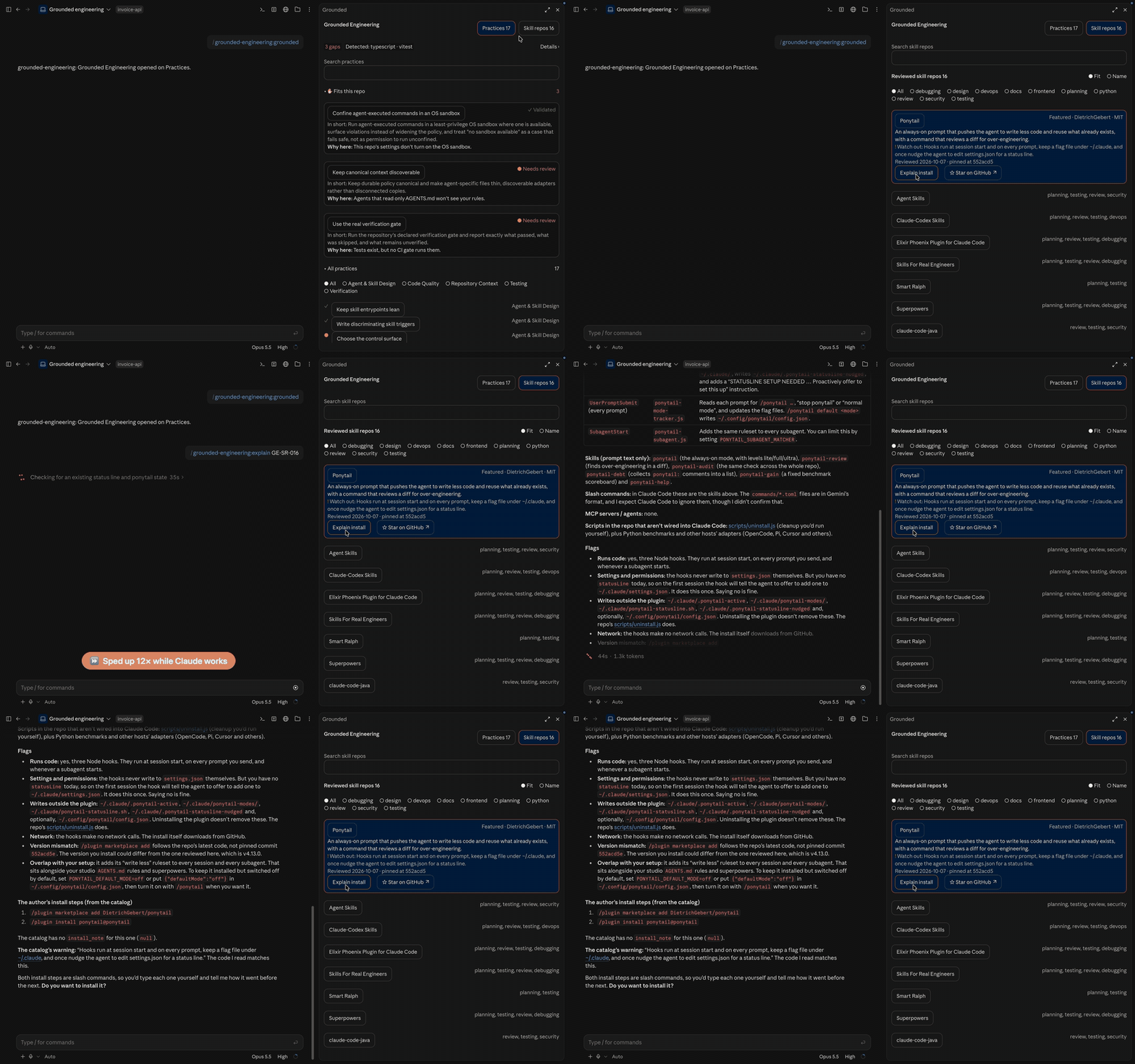
The second screen lists sixteen third-party skill repositories, each read at a
pinned commit and approved by a maintainer before it is listed. The shelf holds
links and our own short notes only; credit and stars go to the authors.
Explain install has Claude read the repository at that commit and list what
it would add (hooks, scripts, network use, settings it changes) before quoting
the author's own install steps. Claude installs nothing unless you agree, and
you type any slash commands yourself. Authors who ask to be removed are
delisted. The records live in research/skill-repos/.
research/       Source observations, pinned references, and category audits
practices/      Short, reusable engineering-practice cards
integrations/   Consumer-specific translation guidance for agent instruction files
plugin/         The Claude Code mod: pane, skills, and generated catalog
src/, bin/      The command-line tool
scripts/        Validation, catalog build, and source-drift tools
Adoption does not rewrite existing policy. preview only reads, and create
stores a proposal under .grounded-engineering/proposals/<proposal-id>/ for
you to review; nothing is written until apply --confirm.
# one-off, nothing installed
npx grounded-engineering adopt preview --profile ai-assisted --adapter claude

# or install the command
npm install -g grounded-engineering
grounded-engineering adopt create --profile ai-assisted --adapter claude
# Review proposal.yaml, plan.md, and diff.patch; complete local_decisions.
grounded-engineering adopt apply <proposal-id> --confirm
grounded-engineering check
Profiles:
baseline: the original eight cards on repository context, code quality,
testing and verification. Its pack metadata stays at v0.2.0 so existing
adopters stay green.ai-assisted: all seventeen cards.Adapters:
neutral (default) writes Markdown to docs/grounded-engineering.md if the
repository has a docs/ folder, otherwise to GROUNDED_ENGINEERING.md.codex writes to AGENTS.md. If AGENTS.override.md exists, Codex reads
it instead, so the tool reports it and writes nothing.claude writes to the repository-root CLAUDE.md. It reports
.claude/CLAUDE.md, nested CLAUDE.md and CLAUDE.local.md files but does
not edit them.Every adapter writes only inside managed blocks keyed by card ID, and leaves
everything outside them byte for byte. Apply writes the target and
.grounded-engineering/manifest.yaml only after re-checking the proposal's
preconditions. A repository can have one adapter target. Adding a second
target, and choosing cards with --cards outside preview, are not supported
yet.
grounded-engineering check reads the manifest and the target files and
compares them with the pack bundled in the installed CLI. It exits 0 when
clean, 1 on drift or a repository-state mismatch, and 2 on an invocation
error. The write path is specified in the
adopt apply policy; compatibility notes for each
release are in CHANGELOG.md.
Cards paraphrase their sources and link to the revision and the file or heading they draw on. We quote only where a source's license allows it, and never copy vendor prompt files. Each card says whether its practice is observed, recommended, or validated in use.
A card does not change when its source does. npm run check:sources reports
drift, and a card marked validated records which revision of each source it
was checked against.
Start with CONTRIBUTING.md and
research/README.md. Keep source observations in
research/, the practice in practices/, and tool-specific wording in
integrations/; a change that mixes them is harder to review.
Grounded Engineering is built and maintained with AI agents.
Original repository content is available under the MIT License. Third-party sources remain under their own licenses and terms; links and attribution are recorded with the evidence.

ADR lifecycle management — create, index, reconcile, supersede, check compliance, and link Architecture Decision Records to code via AgentDB hierarchical store + causal edges (supersedes/amends/depends-on/related)

claude-reflect as a Claude Code mod: a model check on each short prompt finds reusable corrections (any language); a band above the prompt saves them to CLAUDE.md on one press


Early: crit inside Claude Code. Comment on the conversation, your diff or a file in a pane, send the review to Claude, and read Claude's replies in threads.
