Cohey0727@Cohey0727
Cohey0727/CodingAgentTools/tree/main/claude/mods/dashboard
Cohey0727/CodingAgentTools/tree/main/claude/mods/dashboard
在你付费的 LLM 后端上运行 OpenCode、pi、Crush、Reasonix、Codewhale 和 DeepSeek Harness(DeepSeek · Command Code · 你自己的 llama.cpp)——一个仓库、一个
make setup、一个驱动全部六个 CLI 的configs.jsonc,以及它们共享的 skill 和全局指示文件。
一个仓库生成覆盖所有 provider 的六个 CLI 全局配置——OpenCode、pi coding agent、Crush、Reasonix、Codewhale 和 DeepSeek Harness:
| Heading | Provider | Endpoint | API | Flagship model |
|---------|----------|----------|-----|----------------|
| Subscriptions | DeepSeek | https://api.deepseek.com/anthropic | anthropic | deepseek-v4-pro |
| Subscriptions | Local (llama.cpp) | http://127.0.0.1:11301 | anthropic | default |
| Subscriptions | gtr (llama.cpp behind Cloudflare) | https://gtr-halogen.spaghetti-monster.com | openai | default |
| Command Code | Command Code | https://api.commandcode.ai/provider | openai, and anthropic for Claude | deepseek/deepseek-v4.1-flash |
make setup 会把每个 provider 写入每个 CLI 的全局配置,因此直接运行 opencode 会在 /models 下取得全部 provider,直接运行 pi 会在 /model 下取得全部 provider,crush、reasonix 和 codewhale 也都会以完整集合启动,dsh web 同样如此——dsh 没有默认 profile,所以直接运行 dsh 只会回答 --profile <name> is required。
这里没有 proxy 或 translation layer:每个 CLI 都使用它本来支持的 API 与各 endpoint 通信——Anthropic Messages(/v1/messages)或 OpenAI Chat Completions(/v1/chat/completions),按模型选择。它们能访问的每个模型都在同一个地方声明:仓库根目录、git 中的 configs.jsonc,按它在 OpenCode 模型对话框中所属的 heading 分组,并以 tags 标明每个 CLI 启动时使用的模型。这里不保存 secret——API key 以 ${DEEPSEEK_API_KEY} 写入,并从旁边唯一的、被 gitignore 的 .env 读取。
Note: Local 不是托管服务——它指向你自己机器上的
llama-server,由它在/v1/messages提供 Anthropic 形状。这里使用的服务器是 LlamaGate(~/Workspace/LlamaGate):just start会在127.0.0.1:11301启动它,just profiles列出它能加载的模型,just start <profile>切换到其中一个。这里没有账号也没有 key,所以它的API_KEY只是占位符,CLI 只要求它非空。两个 llama.cpp provider 都使用固定的模型 iddefault:llama-server 会以当前已加载的内容回答并忽略请求的名称,因此在服务器上替换模型不需要编辑这里。请将context_window保持在服务器--ctx-size以下或相等。
Note: gtr 是另一台机器上的
llama-server,通过 Cloudflare tunnel 发布,并由 Cloudflare Access 保护。没有 Access 凭据的请求会收到指向登录页的 302,因此它的REQUEST_HEADERS携带 Access service token(CF-Access-Client-Id/CF-Access-Client-Secret),值来自.env。和 Local 一样,它的API_KEY只有在llama-server以--api-key运行时才有实际作用。它回答 OpenAI 形状;如果 gtr 以后被放在这类路由后面,.env中的GTR9_API会把 CLI 切换到 Anthropic 形状。
Note: Command Code 的 Provider API 只在
/v1/messages提供 Claude,其他模型只在/v1/chat/completions提供,在错误的接口上会回答 400——因此它的 Claude 模型带有"api": "anthropic",其余模型遵循 provider 的"api": "openai"。它需要付费方案:Go 方案没有 API 访问权限。它的模型列表不是手动维护的:provider 声明catalog,make update会根据 Provider API 自己的列表重写它。
仓库的另一半是这些 CLI 运行时所使用的内容:skills/ 下的 skill,以及同一个全局指示文件 AGENTS.md;同一个 make setup 会把它们链接到每个 CLI 的配置目录——见 Skills and global instructions。Command Code CLI(cmd)只使用这一半:make setup 会安装它并链接 skill 和 AGENTS.md,但不会为它写入 provider。
AGENTS.md                        # the one global instruction file, linked into every CLI
skills/<name>/SKILL.md           # a skill, linked into ~/.claude/skills and ~/.agents/skills
agents/<name>.md                 # a subagent (none yet), linked into ~/.claude/agents and ~/.agents/agents
opencode/command/<name>.md       # an OpenCode slash command (none yet), linked into ~/.config/opencode/command
opencode/plugin/<name>.js        # an OpenCode plugin, linked into ~/.config/opencode/plugin
pi/extensions/<name>.ts          # a pi extension, linked into ~/.pi/agent/extensions
pi/agents/<name>.md              # a pi subagent definition, linked into ~/.pi/agent/agents
claude/mods/<name>/              # a Claude Code mod (function hooks), loaded through CLAUDE_CODE_PLUGIN_DIRS in ~/.claude/settings.json
configs.jsonc                    # every provider by heading: endpoint, API, models, tags, ${VAR} references (in git)
.env                             # the values those references point at (gitignored, chmod 600)
.env.example                     # the same variables, empty (in git)
bin/ui.sh                        # banner, colors and the output helpers every script shares
bin/models.py                    # reads configs.jsonc for every other script: validates it, resolves tags and routes
bin/common.sh                    # shared resolution: configs.jsonc through models.py, values from .env
bin/style-check.sh               # refuse any name configs.jsonc owns from appearing anywhere else
bin/model-ref.sh                 # "<route id>/<model>" for one provider, so nothing else spells a model id
bin/models-update.sh             # fetches the live catalog of every provider that names one (`make update`)
bin/models-update.py             # rewrites that provider's models in configs.jsonc from it
bin/setup.sh                     # provider wizard: pick providers, paste tokens, install (`make setup-providers`)
bin/pi-global-models.sh          # registers every provider in pi's global models.json (`make pi-global`)
bin/opencode-global-config.sh    # registers every provider in OpenCode's global config (`make opencode-global`)
bin/crush-global-config.sh       # registers every provider in Crush's global crushrc (`make crush-global`)
bin/reasonix-global-config.sh    # registers every provider in Reasonix's global config.toml (`make reasonix-global`)
bin/codewhale-global-config.sh   # registers every provider in Codewhale's global config.toml (`make codewhale-global`)
bin/dsh-global-config.sh         # registers every provider in DeepSeek Harness's home patch (`make dsh-global`)
bin/serve.sh                     # runs dsh web and OpenCode behind nginx for their hostnames (`make serve`)
bin/serve.nginx.conf             # that nginx's config; each start fills it in for the run
bin/serve.dsh.nginx.conf         # its server for dsh web, handing out dsh's startup token
bin/serve.opencode.nginx.conf    # its server for OpenCode, sending OpenCode's server password
bin/skills-common.sh             # where skills, subagents, AGENTS.md and the OpenCode and pi extensions are installed
bin/skills-setup.sh              # links them there (`make setup-skills`)
bin/removed-skills.txt           # skills no longer shipped; setup deletes their old links
bin/skills-list.sh               # their install status (part of `make list`)
bin/skills-uninstall.sh          # removes only the symlinks pointing back here and the claude/mods entry (part of `make uninstall`)
bin/list.sh                      # everything this repo manages (`make list`)
bin/help.sh                      # target overview (`make help`)
docs/migrations/                 # upgrade notes for existing checkouts
Makefile                         # setup / setup-providers / setup-skills / list / uninstall / <agent>-global / serve / help
添加 provider,就是在 configs.jsonc 中加入新条目并在 .env 中加入 key;添加 skill,就是新增 skills/<name>/SKILL.md 并执行 make setup-skills。OpenCode slash command 是新的 opencode/command/<name>.md,plugin 是一个默认导出 { id, setup } 的新 opencode/plugin/<name>.js——同样执行 make setup-skills。pi extension 也是如此:新增 pi/extensions/<name>.ts;pi subagent 则新增 pi/agents/<name>.md。
bash、make 和 python3(bin/models.py 读取 provider 配置)opencode 在你的 PATH 上)——这里只需要 OpenCode 本身;本仓库会写入它的配置。make setup 会使用 v2 安装器安装或升级它:
curl -fsSL https://opencode.ai/v2/install | bash
pi 在你的 PATH 上)——这里只需要 pi 本身;和 OpenCode 一样,它会取得生成的 models.json。本仓库也不会把它打包进去:
curl -fsSL https://pi.dev/install.sh | sh
@mariozechner/pi-coding-agent package 已弃用,而且解析环境引用的方式不同)crush 在你的 PATH 上)——可选,和上面两个一样会取得生成的配置:
brew install charmbracelet/tap/crush   # macOS (Homebrew)
# or
npm install -g @charmland/crush
reasonix 在你的 PATH 上)——可选:
npm install -g reasonix
# or
brew install esengine/reasonix/reasonix
codewhale 在你的 PATH 上)——可选:
curl -fsSL https://codewhale.net/install.sh | sh
dsh)——make setup 安装的两个 CLI 之一,使用 npm install -g @deepseek-ai/dsh@latest,并会升级 PATH 上已有的 dsh。需要 npm 和 Node.js ^22.19.0 || >=24.0.0。这是一个开发者预览版:请先阅读它的 safety noticecmd)——另一个 CLI,使用 npm install -g command-code@latest 安装,并会升级已存在的 cmd。需要 npm 和 Node.js >=22。它没有生成的配置,只有 skills and AGENTS.md;它会在后台自我更新(cmd update 可按需执行)nginx)——只有 make serve 需要它;当设置 SERVE_HOST 或 SERVE_OPENCODE_HOST 后,make setup 会以 brew install nginx 安装或升级它以上每一项都是可选的。无论 CLI 是否已安装,生成器都会写入它的配置,而 make setup 会说明哪些项目没有在你的 PATH 上找到。
make setup
一个互动式向导会完成所有工作:
dsh web 和 opencode web 不是 provider:勾选其中一项会要求输入主机名,make serve 会在该主机名下提供服务configs.jsonc 会在写入任何内容前验证;如果 .env 不存在,就从 .env.example 创建(chmod 600);它会取得此后加入 .env.example 的变量,也会接收仍留在旧 providers/<name>/.env 文件中的 key/loop、/goal、MCP 以及 subag请先查看作者 README 确认 marketplace 和插件名称;命令可能随仓库结构改变。
claude plugin marketplace add Cohey0727/CodingAgentTools
claude plugin install dashboard
Run OpenCode, pi, Crush, Reasonix, Codewhale and DeepSeek Harness on the LLM backends you pay for (DeepSeek · Command Code · your own llama.cpp) — one repo, one
make setup, oneconfigs.jsoncdriving all six CLIs, and the skills and global instruction file they share.
One repo that generates the global config of six CLIs covering every provider — OpenCode, the pi coding agent, Crush, Reasonix, Codewhale and DeepSeek Harness:
| Heading | Provider | Endpoint | API | Flagship model |
|---------|----------|----------|-----|----------------|
| Subscriptions | DeepSeek | https://api.deepseek.com/anthropic | anthropic | deepseek-v4-pro |
| Subscriptions | Local (llama.cpp) | http://127.0.0.1:11301 | anthropic | default |
| Subscriptions | gtr (llama.cpp behind Cloudflare) | https://gtr-halogen.spaghetti-monster.com | openai | default |
| Command Code | Command Code | https://api.commandcode.ai/provider | openai, and anthropic for Claude | deepseek/deepseek-v4.1-flash |
make setup writes every provider into each CLI's global config, so a bare opencode gets them all under /models, a bare pi under /model, crush, reasonix and codewhale each start with the whole set, and so does dsh web — dsh has no default profile, so a bare dsh only answers --profile <name> is required.
There is no proxy or translation layer: each CLI talks to each endpoint in the API it already speaks — Anthropic Messages (/v1/messages) or OpenAI Chat Completions (/v1/chat/completions), chosen per model. Every model any of them can reach is declared in one place: configs.jsonc at the repo root, in git, grouped by the heading it sits under in OpenCode's model dialog, with tags naming the model each CLI starts on. It holds no secret — an API key is written there as ${DEEPSEEK_API_KEY} and read from the single gitignored .env beside it.
Note: Local is not a hosted service — it points at a
llama-serveron your own machine, which serves the Anthropic shape on/v1/messages. Here that server is LlamaGate (~/Workspace/LlamaGate):just startbrings it up on127.0.0.1:11301,just profileslists the models it can load andjust start <profile>swaps to one. There is no account and no key, so itsAPI_KEYis a placeholder the CLIs merely require to be non-empty. Both llama.cpp providers use the fixed model iddefault: llama-server answers with whatever it has loaded and ignores the requested name, so swapping the model on the server needs no edit here. Keepcontext_windowat or below the server's--ctx-size.
Note: gtr is a
llama-serveron another machine, published through a Cloudflare tunnel and gated by Cloudflare Access. Requests without Access credentials get a 302 to the login page, so itsREQUEST_HEADERScarry an Access service token (CF-Access-Client-Id/CF-Access-Client-Secret), whose values come from.env. Like Local, itsAPI_KEYis only a placeholder unlessllama-serverruns with--api-key. It answers the OpenAI shape;GTR9_APIin.envswitches the CLIs to the Anthropic one if it is ever put behind such a route.
Note: Command Code's Provider API serves Claude only on
/v1/messagesand every other model only on/v1/chat/completions, answering 400 on the wrong one — so its Claude models carry"api": "anthropic"and the rest follow the provider's"api": "openai". It needs a paid plan: the Go plan has no API access. Its model list is not maintained by hand: the provider declarescatalogandmake updaterewrites it from the Provider API's own list.
The other half of the repo is what those CLIs run with: the skills under skills/ and the single global instruction file AGENTS.md, symlinked into every CLI's config directory by the same make setup — see Skills and global instructions. The Command Code CLI (cmd) takes only this half: make setup installs it and links it the skills and AGENTS.md, but writes it no provider.
AGENTS.md                        # the one global instruction file, linked into every CLI
skills/<name>/SKILL.md           # a skill, linked into ~/.claude/skills and ~/.agents/skills
agents/<name>.md                 # a subagent (none yet), linked into ~/.claude/agents and ~/.agents/agents
opencode/command/<name>.md       # an OpenCode slash command (none yet), linked into ~/.config/opencode/command
opencode/plugin/<name>.js        # an OpenCode plugin, linked into ~/.config/opencode/plugin
pi/extensions/<name>.ts          # a pi extension, linked into ~/.pi/agent/extensions
pi/agents/<name>.md              # a pi subagent definition, linked into ~/.pi/agent/agents
claude/mods/<name>/              # a Claude Code mod (function hooks), loaded through CLAUDE_CODE_PLUGIN_DIRS in ~/.claude/settings.json
configs.jsonc                    # every provider by heading: endpoint, API, models, tags, ${VAR} references (in git)
.env                             # the values those references point at (gitignored, chmod 600)
.env.example                     # the same variables, empty (in git)
bin/ui.sh                        # banner, colors and the output helpers every script shares
bin/models.py                    # reads configs.jsonc for every other script: validates it, resolves tags and routes
bin/common.sh                    # shared resolution: configs.jsonc through models.py, values from .env
bin/style-check.sh               # refuse any name configs.jsonc owns from appearing anywhere else
bin/model-ref.sh                 # "<route id>/<model>" for one provider, so nothing else spells a model id
bin/models-update.sh             # fetches the live catalog of every provider that names one (`make update`)
bin/models-update.py             # rewrites that provider's models in configs.jsonc from it
bin/setup.sh                     # provider wizard: pick providers, paste tokens, install (`make setup-providers`)
bin/pi-global-models.sh          # registers every provider in pi's global models.json (`make pi-global`)
bin/opencode-global-config.sh    # registers every provider in OpenCode's global config (`make opencode-global`)
bin/crush-global-config.sh       # registers every provider in Crush's global crushrc (`make crush-global`)
bin/reasonix-global-config.sh    # registers every provider in Reasonix's global config.toml (`make reasonix-global`)
bin/codewhale-global-config.sh   # registers every provider in Codewhale's global config.toml (`make codewhale-global`)
bin/dsh-global-config.sh         # registers every provider in DeepSeek Harness's home patch (`make dsh-global`)
bin/serve.sh                     # runs dsh web and OpenCode behind nginx for their hostnames (`make serve`)
bin/serve.nginx.conf             # that nginx's config; each start fills it in for the run
bin/serve.dsh.nginx.conf         # its server for dsh web, handing out dsh's startup token
bin/serve.opencode.nginx.conf    # its server for OpenCode, sending OpenCode's server password
bin/skills-common.sh             # where skills, subagents, AGENTS.md and the OpenCode and pi extensions are installed
bin/skills-setup.sh              # links them there (`make setup-skills`)
bin/removed-skills.txt           # skills no longer shipped; setup deletes their old links
bin/skills-list.sh               # their install status (part of `make list`)
bin/skills-uninstall.sh          # removes only the symlinks pointing back here and the claude/mods entry (part of `make uninstall`)
bin/list.sh                      # everything this repo manages (`make list`)
bin/help.sh                      # target overview (`make help`)
docs/migrations/                 # upgrade notes for existing checkouts
Makefile                         # setup / setup-providers / setup-skills / list / uninstall / <agent>-global / serve / help
Adding a provider is a new entry in configs.jsonc plus its key in .env; adding a skill is a new skills/<name>/SKILL.md and a make setup-skills. An OpenCode slash command is a new opencode/command/<name>.md, and a plugin a new opencode/plugin/<name>.js default-exporting { id, setup } — same make setup-skills. So is a pi extension, a new pi/extensions/<name>.ts, and a pi subagent, a new pi/agents/<name>.md.
bash, make and python3 (bin/models.py reads the provider configs)opencode on your PATH) — only OpenCode itself; this repo writes its config. make setup installs or upgrades it with the v2 installer:
curl -fsSL https://opencode.ai/v2/install | bash
pi on your PATH) — only pi itself; like OpenCode it gets the generated models.json. Not bundled by this repo either:
curl -fsSL https://pi.dev/install.sh | sh
@mariozechner/pi-coding-agent package is deprecated and resolves environment references differently)crush on your PATH) — optional, and like the two above it gets a generated config:
brew install charmbracelet/tap/crush   # macOS (Homebrew)
# or
npm install -g @charmland/crush
reasonix on your PATH) — optional:
npm install -g reasonix
# or
brew install esengine/reasonix/reasonix
codewhale on your PATH) — optional:
curl -fsSL https://codewhale.net/install.sh | sh
dsh) — one of the two CLIs make setup installs itself, with npm install -g @deepseek-ai/dsh@latest, upgrading a dsh already on your PATH. That needs npm and Node.js ^22.19.0 || >=24.0.0. It is a developer preview: read its safety notice firstcmd) — the other one, installed with npm install -g command-code@latest, upgrading a cmd already there. That needs npm and Node.js >=22. It gets no generated config, only the skills and AGENTS.md, and it updates itself in the background (cmd update does it on demand)nginx) — only for make serve, and make setup installs or upgrades it with brew install nginx once SERVE_HOST or SERVE_OPENCODE_HOST is setEvery one of these is optional. A generator writes its config whether or not the
CLI is installed, and make setup says which of them it could not find on your
PATH.
make setup
One interactive wizard does everything:
dsh web and opencode web, are not providers: checking one asks for the hostname make serve serves it underconfigs.jsonc is validated before anything is written; .env is created from .env.example if missing (chmod 600), gets any variables added to .env.example since, and picks up keys still sitting in the old providers/<name>/.env files/loop, /goal, MCP and subagents are installed into pi's user settings (~/.pi/agent/settings.json), and pi's model catalogs are refreshed, and DeepSeek Harness and Command Code are installed with npm install -g <package>@latest — and nginx with brew install nginx once SERVE_HOST or SERVE_OPENCODE_HOST is set, for make serve. Anything of these already installed is upgraded to its latest version, so re-running make setup is also how you update themconfigs.jsonc, not just the tagged ones, and all of them starting on the default provider. pi also gets the keys OpenCode's /connect holds, for Zen and Go. OpenCode itself is installed or upgraded with its v2 installer, and the OpenCode plugins with opencode plugin addAGENTS.md are symlinked into the places each CLI reads them from, and OpenCode gets this repo's slash commands and plugins — /loop and /goal among them — in ~/.config/opencode, and pi gets its dashboard in ~/.pi/agent/extensions (details below)To rotate a token, pick up new settings or add a provider later, just re-run make setup. make setup-providers and make setup-skills each run one half on its own; only the provider half prompts.
Coming from an older checkout? docs/migrations/ has the per-variable
mapping — see 2026-08-15 — pi 対応と .env の共通設定化,
2026-08-15 — GLM-5.3,
2026-08-24 — OpenCode ランチャー廃止とグローバル設定生成,
2026-09-03 — pi ランチャー廃止とグローバル models.json 生成,
2026-09-05 — OpenCode の lean エージェント,
2026-09-08 — claude-code-settings の統合,
2026-09-08 — OpenCode の /goal,
2026-09-09 — providers/ 廃止と configs.jsonc への集約,
2026-09-11 — OpenCode の Subscriptions 見出し,
2026-09-13 — OpenCode の /loop,
2026-09-13 — Claude Code ランチャー廃止と見出し・API 別の configs.jsonc,
2026-09-18 — pi のダッシュボード拡張,
2026-09-18 — pi から OpenCode Zen / Go を使う,
2026-09-18 — pi の MCP・サブエージェントと起動モデル,
2026-09-18 — pi の provider id を label に揃える,
2026-09-27 — OpenCode v2 移行,
and 2026-10-03 — pi 1.0.
| Target | What it does |
|--------|--------------|
| make setup | Both halves: the provider wizard, then the skill, AGENTS.md, OpenCode extension, pi extension and Claude Code mod install |
| make setup-providers | The wizard above only: tokens, .env upkeep, pi packages, DeepSeek Harness, Command Code, OpenCode plugins, and every global config |
| make setup-skills | The shared assets only: skills/, agents/, AGENTS.md, opencode/ and pi/ into every agent CLI, and claude/mods/ into Claude Code's CLAUDE_CODE_PLUGIN_DIRS |
| make check | Validate configs.jsonc, then refuse any concrete name outside it (see CLAUDE.md). What the pre-commit hook runs |
| make hooks | Install the lefthook pre-commit hook that runs make check |
| make list | Every provider with its heading, endpoint and models with their tags, then every skill, subagent, OpenCode extension and pi extension with its install status |
| make update | Fetch the live model catalog (catalog) of every provider that names one and rewrite its models in configs.jsonc — ids, context windows and per-model API follow the catalog, tags stay hand-written — then regenerate every global config. One command brings everything up to date |
| make pi-global | Re-generate pi's global ~/.pi/agent/models.json from configs.jsonc, set the startup model in ~/.pi/agent/settings.json, and link the keys OpenCode's /connect holds into ~/.pi/agent/auth.json — run it after changing a model or endpoint, or connecting a provider in OpenCode |
| make opencode-global | Re-generate OpenCode's global config from configs.jsonc — run it after editing it |
| make crush-global | Re-generate Crush's global ~/.config/crush/crushrc from configs.jsonc |
| make reasonix-global | Re-generate Reasonix's global ~/.reasonix/config.toml, and the keys it reads from ~/.reasonix/.env |
| make codewhale-global | Re-generate Codewhale's global ~/.codewhale/config.toml, keys included, written at 600 |
| make dsh-global | Re-generate DeepSeek Harness's home patch ~/.dsh/cordis.patch.yml, and the keys it reads from ~/.dsh/.env |
| make serve | Run dsh web and OpenCode behind nginx for the hostnames SERVE_HOST and SERVE_OPENCODE_HOST name, so each opens there without a login of its own — see dsh web and OpenCode through a Cloudflare Tunnel. Each starts only when its hostname is set |
| make uninstall | Remove the packages each agent lists, every global config this repo generated and the token files beside them, the symlinks pointing back into this repo (pi extensions included), the plugin shims generated from it, the claude/mods entry in Claude Code's CLAUDE_CODE_PLUGIN_DIRS, and the entries in pi's auth.json that read OpenCode's keys. The .env is left alone |
| make help | The target list above, on the terminal |
opencode          # OpenCode — every configured provider is in /models
pi                # pi — every configured provider is in /model
crush             # Crush — every configured provider is in its model picker
reasonix          # Reasonix — every configured provider is in /model
codewhale         # Codewhale — every configured provider is in its model picker
dsh web           # DeepSeek Harness — every configured provider is in the Web UI's model picker
make setup (and make pi-global) write every provider that has a token into ~/.pi/agent/models.json, so a bare pi has all of them and /model switches mid-session. Each is filed under its label — the name OpenCode's model dialog puts before its models — or its name when it has none:
pi                                         # starts on the model pi.overrides names
pi --model DeepSeek/deepseek-v4-pro            # or pick at launch time
pi --model commandcode/claude-opus-5
pi also has OpenCode Zen and OpenCode Go built in, as opencode and opencode-go. They are not providers in configs.jsonc: you connect them once with /connect in OpenCode, and make setup (and make pi-global) gives pi an entry in ~/.pi/agent/auth.json for every key OpenCode stored that pi has a provider for. The entry is a command reading the key back out of OpenCode's ~/.local/share/opencode/auth.json, so no key is copied and one rotated in OpenCode needs no re-run. An entry you made yourself with pi's /login is left in place, and OAuth logins are not shared: pi refreshes those through its own /login. make setup also refreshes pi's model catalogs, so the Zen and Go lists include models those services added after the installed pi was released.
pi --model opencode-go/deepseek-v4.1-flash     # OpenCode Go, on the key OpenCode's /connect stored
pi --list-models opencode                      # what Zen and Go serve
The two generators otherwise start you on the default provider; pi.overrides points pi at OpenCode Go's DeepSeek V4.1 Flash instead, and opencode.overrides starts OpenCode on OpenCode Zen's free MiMo V2.6 Flash. See Default provider. For pi that means defaultProvider / defaultModel in ~/.pi/agent/settings.json, the two keys Ctrl+S in /model writes — so a re-run replaces a pick you saved there. The rest of that file is left as it is. Writing them needs python3; without it the two keys are skipped and pi starts wherever it was.
make setup (and make opencode-global) write every provider that has a token into the global ~/.config/opencode/opencode.json, so a bare opencode starts with all of them and /models switches mid-session — each under the heading configs.jsonc files it under, beside OpenCode's own Zen and Go (see OpenCode's model dialog):
opencode                                                  # starts on the model opencode.overrides names
opencode --model deepseek-anthropic/deepseek-v4-pro   # or pick at launch time
opencode --model commandcode-openai/deepseek/deepseek-v4.1-flash
Note small_model — the model OpenCode names a session with, and its only use for one — stays at the one opencode.overrides sets even after you switch the main model via /models.
Crush, Reasonix, Codewhale and DeepSeek Harness work the same way — one generated global config each:
crush                                      # starts on the large slot: the default provider's model
reasonix                                   # starts on default_model in ~/.reasonix/config.toml
codewhale                                  # starts on default_text_model in ~/.codewhale/config.toml
dsh web                                    # starts on agent-default-model in ~/.dsh/cordis.patch.yml
dsh --profile headless "run the tests"     # the same providers, one task, no browser
DeepSeek Harness has no terminal UI of its own: dsh web serves one on
http://127.0.0.1:3080, and --profile headless answers one task and exits.
A model picked or a provider edited in the Web UI is saved to
~/.dsh/settings.yaml, which dsh merges over the generated patch — so it
survives make dsh-global, and once a model is saved there a re-run no longer
changes the one dsh starts on.
Crush has two model slots rather than a free choice per session — large is
what the interactive agent runs on, small what it delegates cheap work to —
and the generated crushrc points them at the default provider's default and
small models. Naming a model it does not know is not an error there: Crush
silently falls back to a model of its own choosing and writes that correction
back to disk, so a hand-edit that misspells one is easy to miss.
make serve runs dsh web and OpenCode's Web UI for a browser elsewhere,
reached through a Cloudflare Tunnel and signed in to by Cloudflare Access alone
— no dsh token, no OpenCode password. SERVE_HOST and SERVE_OPENCODE_HOST
name the tunnel's public hostnames — set them by checking dsh web and
opencode web in make setup, in .env, or in the environment
(SERVE_HOST=dsh.example.com make serve). Each app starts only when its
hostname is set; with neither, nothing starts.
make serve
# dsh web: http://127.0.0.1:3080/?token=…    ← on this machine
# dsh web: https://dsh.example.com/ — through the tunnel, no token needed
# opencode: https://oc.example.com/ — through the tunnel, no password needed
| Listens on | What |
|---|---|
| 127.0.0.1:3081 | nginx — every route of the tunnel points here; it tells the apps apart by Host |
| 127.0.0.1:3080 | dsh web, which also accepts SERVE_HOST besides loopback as the Host and Origin of a request (--trusted-host) |
| 127.0.0.1:3082 | opencode serve, a server of its own beside OpenCode's background service, started from $HOME |
The routes must not override the HTTP Host header: both apps check Origin
against it. Each hostname needs a subdomain of its own, since OpenCode's Web UI
asks for /api at the root.
Neither app lets its login be turned off, so nginx signs you in:
SERVE_HOST, into a
redirect to the token URL, which dsh trades for a 30-day cookie.make serve makes
one up for the run and nginx sends it with every request for
SERVE_OPENCODE_HOST. OpenCode then takes whatever reaches it as signed in,
so nginx refuses a request whose Origin is another site.So make serve writes nginx a config for this run, in a directory only you can
read, removed when it stops. make setup installs nginx with Homebrew once
either hostname is set.
That makes Cloudflare Access the only lock on both hostnames, and whoever gets
past it can run any command and read any file on this machine — OpenCode opens
any directory as a project and has a terminal. Admit only yourself, and turn on
each route's Access protection in the tunnel too, so a request that skipped
Access is refused before it reaches nginx. Anyone with an account on this
machine can also reach 127.0.0.1:3081 directly.
Every generated global config starts on whichever provider is marked primary in configs.jsonc:
"deepseek": {
  "primary": true,
  ...
}
At most one provider may say so. When none does, or it has no token, the first configured one wins instead, so a fresh checkout still gets a working one. It sets OpenCode's model and small_model, pi's defaultProvider / defaultModel, and DeepSeek Harness's agent-default-model.
OpenCode can start somewhere else. make opencode-global deep-merges the top-level opencode.overrides in configs.jsonc into the generated opencode.json last, key by key, so its keys win. That is how OpenCode starts on a model of OpenCode Zen, and titles sessions with one of OpenCode Go — both come in through /connect and are not providers here:
"opencode": {
  "overrides": {
    "model": "opencode/mimo-v2.6-flash-free",
    "small_model": "opencode-go/deepseek-v4.1-flash"
  }
}
pi works the same way. make pi-global deep-merges the top-level pi.overrides into ~/.pi/agent/settings.json after writing the default provider's model there, so pi starts on OpenCode Go's DeepSeek V4.1 Flash instead. Any other key of pi's settings can go there, written in pi's own form:
"pi": {
  "overrides": {
    "defaultProvider": "opencode-go",
    "defaultModel": "deepseek-v4.1-flash"
  }
}
Anything else OpenCode's config takes goes there too, written in OpenCode's own form. The permission policy does: "permission": "allow" runs every tool without an approval prompt, so a session never stops to ask. Its MCP servers do — today the Playwright MCP, started on the persistent profile ~/playwright/profiles/default so a login survives restarts, and Parallel Search, a remote server at https://search.parallel.ai/mcp that searches and fetches the web with no key. OpenCode expands {env:HOME} in the command itself, so the same entry works on every machine. Chrome locks a profile to one browser, so while another agent drives that profile, OpenCode's Playwright cannot start one. opencode mcp list shows whether each connected.
make setup installs two community plugins into OpenCode:
| Plugin | Adds |
|--------|------|
| oc-tps | Live tokens per second and time to first token in the session prompt |
| @tarquinen/opencode-dcp | A compress tool the model uses to summarize finished parts of a session, and pruning of repeated or failed tool calls. Its settings are in ~/.config/opencode/dcp.jsonc, written on first run |
A plugin has a server half, listed under plugins in opencode.json, and a TUI half, listed under plugins in ~/.config/opencode/cli.json. The server halves are in opencode.overrides.plugins in configs.jsonc, so make opencode-global keeps them. make setup then runs opencode plugin add for every plugin in OPENCODE_PLUGINS in bin/setup.sh, and opencode plugin update brings each to its latest. A new plugin with a server half goes in both lists.
@slkiser/opencode-quota and opencode-handoff are out until they ship
v2-format plugins — see docs/migrations/2026-09-27-opencode-v2.md.
pi keeps its core small and ships no loop of its own, nor subagents. Its
built-in MCP cannot read OpenCode's servers, so MCP comes from a package too.
Everything of that kind lives in pi packages, so
make setup installs four of them:
| Package | Adds | What it does |
|---------|------|--------------|
| npm:@realvendex/pi-loop | /loop | Repeat a prompt until a stop condition: --max N, --until "TEXT", --until-stable N (convergence), --timeout 5m, --yes for autopilot |
| npm:pi-goal | /goal | A persistent objective the agent keeps working on across turns until it is complete, paused, or out of budget |
| npm:pi-mcp-adapter | /mcp | MCP servers behind one mcp tool, started when first used |
| npm:@tintinweb/pi-subagents | /agents | Claude Code's Agent tool with general-purpose, Explore and Plan, run in the foreground or background, plus Claude Code's Workflow scripts as SubagentWorkflow |
/loop "make the tests pass" --until-stable 2 --max 20
/goal "port the CLI flags to the new parser"
They go into pi's user settings (~/.pi/agent/settings.json). The list is
PI_PACKAGES in bin/common.sh, as <source>=<slash command> pairs. Install
a different set for one run by setting it:
PI_PACKAGES="npm:pi-reactor=/reactor" make setup
MCP. pi runs the same MCP servers as OpenCode. make pi-global adds an
opencode import to the adapter's ~/.pi/agent/mcp-adapter.json, and the
adapter reads the mcp entries of the generated
~/.config/opencode/opencode.json, which come from opencode.overrides.mcp in
configs.jsonc. Parallel Search gives pi web search and fetch with no key, and
Playwright drives the same persistent browser profile. Only one agent at a time
can drive that profile. /mcp shows each server and its tools. Other keys in
mcp-adapter.json are kept.
~/.pi/agent/mcp.json is pi's built-in MCP config. The adapter replaces the
built-in: on its first start it adds "-builtin:mcp" to extensions in pi's
settings.json, and it still reads the servers pi mcp add writes to
mcp.json, but ignores an imports there and warns at every start.
make pi-global moves such an imports into mcp-adapter.json, and removes
mcp.json if nothing else is left in it.
Subagents. The skills written for Claude Code's Agent tool, such as
deep-review and fanout, run in pi unchanged. The
package's built-in Explore runs on Claude Haiku, which this setup reaches only
through paid providers, so pi/agents/Explore.md replaces it with the same
prompt and no model:. It then runs on the parent session's model.
general-purpose and Plan inherit it already. Each subagent is a full model
session, so running several in parallel multiplies the cost.
Note: pi packages run with full system access and the registry is not curated. All four packages above are third-party npm packages — read the source before trusting them with an unattended loop, and prefer a container or a throwaway checkout for autopilot runs.
make setup links pi/extensions/dashboard.ts into ~/.pi/agent/extensions,
so every pi starts with a two-line footer in place of the built-in one, a
to-do list the model keeps while it works, and a side panel:
─ todo 1/3 ─────────────────────────────────────────────────────────────
  ▶ Run hello.py with python3
  ○ Confirm the output
── ⠏ Working ────────────────────────────────────────────────────────────
◆ deepseek-v4-pro medium · ctx ▰▱▱▱▱▱▱▱ 12% 121k/1.00M · ↑51.5k ↓688 · ⚡ 60.8 tok/s · ⏱ 14s ⚙ 1 ·  main
▶ Port the CLI flags to the new parser · todo 1/3 · ▶ Run hello.py with python3 · loop: 2/10
| Part | What it shows |
|------|---------------|
| Footer, first line | Model and thinking level, context window use as a bar that turns yellow at 65% and red at 85%, tokens sent and received this session (cached input included), tokens per second, time since the prompt and tools running, git branch |
| Footer, second line | The topic, to-do progress and the item in progress, then whatever other extensions report there, such as /loop and /goal |
| To-do widget | The open items above the editor, while there are any |
| /panel or ctrl+alt+p | A side panel at the top right with the full to-do list and the session figures, including cost when the provider reports one. It does not take the keyboard, so you keep typing while it is open. Hidden below 100 columns |
| /todos | Hide or show the to-do widget |
| /topic TEXT | Name the session. The topic is an active /goal objective first, then this name, then the first prompt |
The to-do list comes from a todo tool the extension gives the model, together
with one paragraph of system prompt asking it to plan any task of more than a
few steps with that tool and to tick items off as it verifies them. The list is
stored in the tool results, so /tree and forks restore the list that belonged
to that point in the session.
Tokens per second is measured from the first streamed token, so waiting for the provider does not count. A live estimate shows while a reply streams and the provider's own output count replaces it when the reply ends. Replies shorter than a couple of dozen tokens leave the last figure in place.
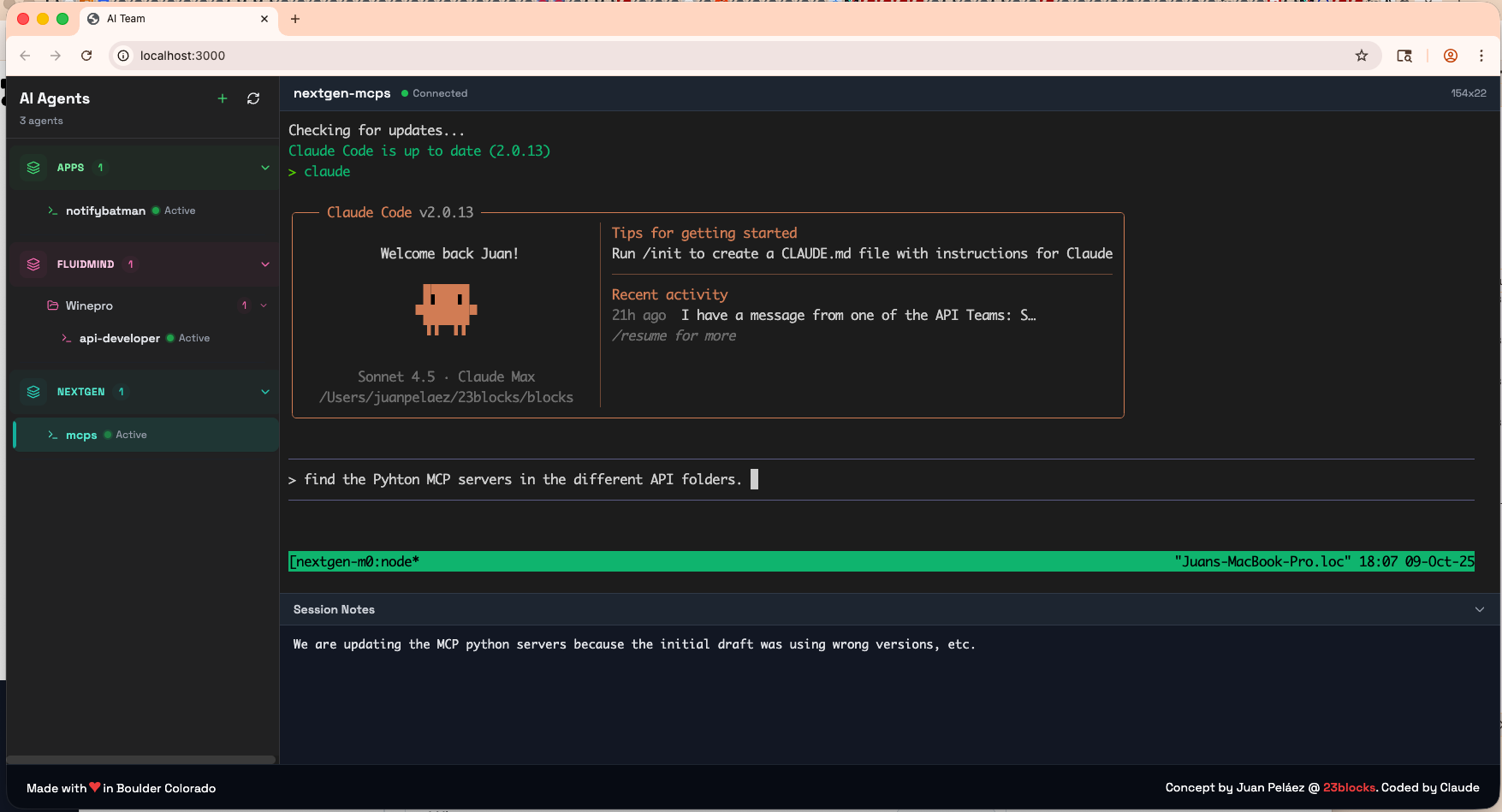
claude/mods/dashboard/ is a Claude Code mod: a plugin of function hooks that
docks a pane beside the transcript with the session's figures and its to-do
list. make setup (and make setup-skills) loads it, and every mod beside it,
by adding this repo's claude/mods to CLAUDE_CODE_PLUGIN_DIRS under env in
~/.claude/settings.json, at the path the repo has on that machine. Claude Code
reads that variable from no other settings file and loads each child of a
folder of plugins, so a new mod needs only a new session. The file is merged,
not rewritten: the keys Claude Code keeps there and any other folder in the
variable stay, and make uninstall takes out only this entry. A session that
was already running when setup ran does not have the mod; to try one without
setup, start a session with
claude --plugin-dir claude/mods/dashboard
| Part | What it shows |
|------|---------------|
| Header | Model and effort, session time, git branch with ahead/behind and changed files, lines added and removed, the first prompt |
| Context | The window as one bar split by content (system prompt, tools, messages, …) with the auto-compact point and the reserve after it, the fill per request, the requests left before auto-compaction, compactions and the tokens they freed |
| To-do | Progress and each item's time; the item in progress counts up live |
| Speed | Tokens per second of each response as a braille graph, the average, the peak and the wait for the response to start |
| Tokens | Cache reads, cache writes, fresh input and output as one bar; the cache hit rate of the last request and of the session, cache misses, how long the cache stays warm while idle; input and output tokens per minute; cost, cost per hour and the last turn's cost |
| Limits | On a subscription, the 5-hour and 7-day windows: their fill with a cursor where the window's time stands, ◆ ahead of that pace, ◇ behind it, ◈ on it, the reset, and where the window ends up at this pace once that passes 90% |
| Activity | The running turn and the tools running, model time against tool time, the last 24 tool calls as ✓ or ✗, and calls, failures and average time per tool |
| Agents, Files | Subagents with their model, time and tokens; the files edited with the lines added and removed |
| Command or key | What it does |
|----------------|--------------|
| /dashboard | Open or close the pane. It also opens by itself when a session starts in a terminal at least 144 columns wide |
| /dashboard reset | Zero the figures |
| 1–8 in the focused pane (ctrl+x tab) | Fold or unfold a section. Folds are kept for the next session |
While the pane is out of sight its gist stays in the status line. A toast says when the context passes 80%, when a rate-limit window passes 75%, 90% and 95% (once per window, whichever session sees it), and when the last to-do is done.
The to-do list follows Claude Code's own TodoWrite or task tools when the
session has them; otherwise the mod gives the model a todo tool of its own.
Tokens per second runs from the first streamed piece of a response to its end, so thinking that streams no visible text counts as generation time rather than making the text that follows look fast. The cache is assumed to expire after 5 minutes until a hit after a longer pause shows a 1-hour TTL. A cache miss is a request that wrote back to the cache more than the conversation grew by — at least 2,000 tokens and 5% of the prompt, the threshold Claude Code itself uses. The figures count from the moment the mod loads, so a resumed session starts them at zero.
claude plugin validate claude/mods/dashboard and
claude plugin test claude/mods/dashboard check it.
claude/mods/pr-title/ names the session after the PR it opened. When a Bash
call runs gh pr create and prints the new PR's URL, the mod reads the PR's
number and title with gh pr view and renames the tmux window the session runs
in to #<number> <title> right away (tmux rename-window, which also turns off
automatic-rename for that window). The session itself gets the same name
through /rename once the turn ends: Claude Code does not run a slash command
from inside the tool call that holds the turn. Outside tmux only the session is
renamed. It loads like the dashboard, through claude/mods.
claude plugin validate claude/mods/pr-title and
claude plugin test claude/mods/pr-title check it.
OpenCode runs one turn per message, so /loop is this repo's own, like
/goal: opencode/plugin/loop.js registers the slash command and runs the
repetition behind it, installed by make setup-skills. It gives OpenCode what npm:@realvendex/pi-loop gives pi —
one prompt, run again on every turn until the model says it is done or a stop
condition is met:
/loop fix the failing tests, one failure at a time
/loop --until "all tests pass" run the suite and fix what fails
/loop --until-stable 2 summarise src/parser, then report nothing left to do
/loop --max 5 evaluate the options and pick one
/loop 5m check the deploy status
/loop --timeout 30m keep working through the queue
/loop                         show the current loop
/loop pause | resume | clear  control it
Flags come before the task, and a duration there is the interval —
/loop 5m <task> is /loop --every 5m <task>. Durations use s, m, h and
d, and may be compound: 30s, 2h30m, 1d. Every turn carries the same
task, and the continuation tells the model to check what the previous turn
actually produced before acting again — the user is not there to answer
questions. --every runs the first turn at once and then leaves the session
idle until the interval has passed; the wait is a timer in the opencode
process, and a turn already running when it comes due finishes first
(/loop status shows every 5m · next in 3m). The loop ends when
loop_finish tool — complete with the evidence, or
blocked with what would unblock it. That tool is the only way the model can
end the loop itself--until "TEXT", the same reply comes back
--until-stable N times in a row, or a --timeout runs out--max (1000 by default)/loop pause or /loop clear/loop resume picks it upLoop state is one JSON file per session under ~/.local/share/opencode-loop/,
pruned after 30 days like the goal's. A session runs one continuation loop at a
time: /loop refuses to start while a goal is active and /goal refuses while
a loop is, so two of them cannot take turns spending tokens in the same session.
Note: like a goal, an active loop keeps the model working on its own, and the continuation turns run tools like any other turn. OpenCode still asks for permission unless you started it with
--auto— the pairing to be careful with is--autoplus an open-ended task.opencode --purestarts without any external plugin, this one included.
OpenCode runs one turn per message and then waits, so /goal is this repo's
own: opencode/plugin/goal.js registers the slash command and runs the loop
behind it, installed by make setup-skills. It gives OpenCode what npm:pi-goal gives pi — a
persistent objective the session keeps working on across turns:
/goal port the CLI flags to the new parser, verified by the existing tests
/goal --tokens 50k finish the migration and verify the suite
/goal --turns 10 make the flaky checkout test deterministic
/goal                         show the current goal
/goal pause | resume | clear  control it
Setting a goal replaces the message OpenCode would have sent with the objective and the rules of the loop; every time the session goes idle the plugin sends the next continuation, with the objective and the budget spent so far. It stops when
goal_finish tool — complete with the evidence, or
blocked with what would unblock it. That tool is the only way the model can
end the loop itself/goal pause or /goal clear--turns (1000 by default) or --tokens/goal resume picks it upGoal state is one JSON file per session under
~/.local/share/opencode-goal/, so it survives compaction and a /goal status
in between; files older than 30 days are pruned on startup.
Note: an active goal keeps the model working on its own, and the continuation turns run tools like any other turn. OpenCode still asks for permission unless you started it with
--auto— the pairing to be careful with is--autoplus an open-ended objective.opencode --purestarts without any external plugin, this one included, if a session ever needs to run with the loop out of the picture entirely.
Two files at the repo root, and that is the whole configuration:
| File | Holds | In git |
|------|-------|--------|
| configs.jsonc | Every provider, grouped by heading: endpoint, API, models, limits, the tags that say which model each CLI starts on, and a ${VAR} reference wherever a value may come from outside | yes |
| .env | The values those references point at — nothing else | no — gitignored, chmod 600 |
A whole provider in configs.jsonc is a dozen lines, which every generator reads
through bin/models.py. The key one level under providers is the heading its
providers sit under in OpenCode's model dialog:
{
  "providers": {
    "Subscriptions": {
      "deepseek": {
        "label": "DeepSeek",
        "API_KEY": "${DEEPSEEK_API_KEY}",
        "BASE_URL": "${DEEPSEEK_BASE_URL:-https://api.deepseek.com/anthropic}",
        "api": "anthropic",
        "defaults": { "context_window": 1000000, "max_tokens": 384000, "reasoning": true, "input": ["text"] },
        "models": [
          { "id": "deepseek-v4-pro", "tags": ["default"] },
          { "id": "deepseek-flash",  "tags": ["small"] }
        ]
      }
    }
  }
}
and the .env beside it is one line per key:
DEEPSEEK_API_KEY=sk-...
Two reference forms work in any string — API_KEY, BASE_URL, api, and each
value under REQUEST_HEADERS — and both resolve against the environment when the
value is needed, so nothing from .env is ever copied into the file:
| Written | Resolves to |
|---------|-------------|
| ${NAME} | the environment's NAME, empty when it is unset |
| ${NAME:-fallback} | the environment's NAME, or fallback when it is unset or empty |
Reading the file therefore tells you which values can come from outside and what
happens when they do not. A secret has no sensible default and is written the
first way; an endpoint ships the second, so configs.jsonc carries a working
default and .env can point the provider somewhere else — a regional host, a
metered endpoint, a proxy or gateway in front of it — without editing a
git-tracked file.
A provider whose API_KEY resolves to nothing is left out of every generated
config rather than breaking it.
API_KEY and each REQUEST_HEADERS value travel into the generated configs as
references, so each is one reference standing alone — a header value may be a
plain literal instead — and its fallback uses only letters, digits and . _
: / -, since the generated command takes it as a bare word. make check
refuses anything else: a reference inside a longer string, or a fallback that
needs quoting, would leave a generator nothing to write but the resolved secret.
// line comments are allowed, so the constraints behind a value can sit next
to it. Every model listed is offered by OpenCode's /models and pi's /model,
whether or not it carries a tag.
The .env is only ever read inside a subshell, so one provider's key never
leaks into the resolution of another's.
| Tag | The model… |
|-----|------------|
| default | every generated config starts on, Crush's large slot |
| small | OpenCode titles sessions with, Crush's small slot. Falls back to default |
Every CLI gets every model in the file — they pick between them in the
session (/models, /model) — so a tag only decides where one starts, and for
OpenCode and pi only until opencode.overrides / pi.overrides name a model
(see Default provider).
default is required, a tag may appear on only one model, and an unknown tag is
an error rather than a label — make setup refuses to install until it is fixed.
| Field | Meaning |
|-------|---------|
| id | Required. The id sent to the provider |
| api | "anthropic" or "openai" — overrides the provider's api for this model |
| tags | Which slots this model fills; see Tags |
| context_window, max_tokens | Required. Every generated config carries them — pi otherwise assumes 128k / 16k, and OpenCode never compacts a session on a model without a context limit |
| reasoning, input | Whether the model supports extended thinking (true or false, default true) and what it accepts (["text"] or ["text", "image"]) |
defaults at the top level supplies any of these but id, api and tags to
every model that does not set it itself.
A provider sits under its heading, and its key there is the provider's name —
unique across headings. Each generated config but pi's files it once per API its
models speak, as the route <name>-<api>; make list prints the name.
| Field | Meaning |
|-------|---------|
| label | Leads each model's name in OpenCode's model dialog (DeepSeek deepseek-v4-pro), which tells providers sharing a heading apart, names the route in DeepSeek Harness, and is the provider's id in pi. Omit it where the heading already says whose models they are |
| API_KEY | Required. A ${VAR} reference to the key, standing alone |
| BASE_URL | Required. The root both APIs hang off — /v1/messages or /v1/chat/completions is appended — as ${VAR:-default} so .env can route it elsewhere |
| api | Required. "anthropic" (Anthropic Messages) or "openai" (OpenAI Chat Completions): what every model speaks unless it sets its own. May be a ${VAR:-default} reference where the shape depends on the route, as gtr's does |
| catalog | Path GET with BASE_URL listing the provider's models, in OpenAI's /v1/models shape. make update rewrites the provider's models from it, so a provider with one is not maintained by hand |
| REQUEST_HEADERS | Extra request headers as a { "Name": "value" } object, sent by every CLI — e.g. a Cloudflare Access service token in front of a self-hosted server. A value is a literal or one ${VAR} reference standing alone, and a reference is carried wherever the CLI's format can express one |
| primary | true on at most one provider — the one every generated config starts on |
| picker | false keeps the provider out of the checkbox list make setup starts from — configure it by naming it directly (bin/setup.sh <name>). A key that resolves still registers it like any other provider |
| opencode.lean | true gives the provider a lean agent of its own |
| opencode.context_window, opencode.max_tokens | Cap every model's limits for OpenCode. These are the window a session may grow into before it is compacted, so a backend too slow to prefill its full context sets them lower — gtr does |
Everything else about a CLI — the command it execs, the variables it reads, the shape of its config — is that CLI's own generator's business, not a provider's; see Generated configs.
Every CLI here reads a single global config, and this repo writes it: one
generator under bin/, one make <agent>-global target, and no CLI's shape
leaking into another's. make setup runs every one of them.
| CLI | Generator | What it writes |
|-----|-----------|----------------|
| pi | bin/pi-global-models.sh | ~/.pi/agent/models.json, and defaultProvider / defaultModel in settings.json |
| OpenCode | bin/opencode-global-config.sh | ~/.config/opencode/opencode.json with opencode.overrides merged in last, and one key file per provider under claude-compatibles/ |
| Crush | bin/crush-global-config.sh | ~/.config/crush/crushrc |
| Reasonix | bin/reasonix-global-config.sh | ~/.reasonix/config.toml, and the keys it names in ~/.reasonix/.env |
| Codewhale | bin/codewhale-global-config.sh | ~/.codewhale/config.toml, at 600 — it is the one that holds the keys |
| DeepSeek Harness | bin/dsh-global-config.sh | ~/.dsh/cordis.patch.yml, and the keys it names in ~/.dsh/.env |
Every one of those files opens with a line naming the target that rewrites it. A file at that path without the line is never touched: the generator says so and stops, so a config written by hand survives.
How a key reaches each of them. configs.jsonc holds a reference, never a
key, and each generator carries that as far as its CLI's format allows:
!bash -c '…' in
pi's models.json, $(bash -c '…') in a crushrc, both reading the .env
through bin/common.sh. Nothing is copied, so a rotated key needs no re-run.{file:…}, under ~/.config/opencode/claude-compatibles/.api_key_env and reads the value only from the .env in its own
directory, and DeepSeek Harness, whose apiKeyEnv falls back to the .env
in ~/.dsh after the process environment, its own credentials file and the
working directory's .env. The config still holds no key; the value is copied
into that .env at 600, and a rotated key does need a re-run.api_key_env is resolved from the process environment
alone, so a reference there works only for someone who has already exported
the variable, and every provider would otherwise be unusable. Its
config.toml is created at 600 before a byte is written to it.Request headers follow the same order: Codewhale, whose config.toml already
holds the keys at 600, gets their values there too. Reasonix's config can only
take a header value as it stands, so a provider whose headers carry a secret is
left out of it rather than have the secret written in — the generator names
which and why. That is why gtr, whose Cloudflare Access token travels in a header, reaches every
CLI here except Reasonix. DeepSeek Harness takes header values only as they
stand, but a !!js expression in a patch is evaluated when the patch loads, so
each header there runs the same .env command pi and Crush run — once per
launch (and per live reload of the patch under dsh web) rather than per
request.
OpenCode's /models lists models under one heading per provider display name,
pins OpenCode Zen to the top and orders the rest by name. The generated config
names every route after the heading configs.jsonc files its provider under, so
each heading there is one heading in the dialog, beside OpenCode's own. A model's
display name leads with its provider's label when it has one:
OpenCode Zen          OpenCode's own, from /connect
Command Code          providers."Command Code"
  claude-opus-5
  deepseek/deepseek-v4.1-flash
OpenCode Go           OpenCode's own, from /connect
Subscriptions         providers.Subscriptions
  DeepSeek deepseek-v4-pro
  Local default
Nothing under those headings comes from OpenCode's own catalog (models.dev).
Each route is declared in full — @ai-sdk/anthropic for an anthropic one,
@ai-sdk/openai-compatible for an openai one — with exactly the models listed
in configs.jsonc. It is filed under <name>-<api>, and the suffix is also what
keeps it apart from a provider of the same name in that catalog, whose
definition OpenCode would otherwise merge into it. pi, Crush, Codewhale and
DeepSeek Harness ship catalogs that merge the same way, so every generator uses
the same id.
OpenCode Zen and OpenCode Go are OpenCode's own services: /connect stores their
key in OpenCode's auth.json, and nothing here generates them. They serve some
of the same model ids as the providers here, so the heading, not the id, says
whose quota a request draws on. The prompt footer prints the model with its
heading — deepseek/deepseek-v4.1-flash Command Code against DeepSeek V4.1 Flash OpenCode Go.
.envOne variable per line, named by whatever configs.jsonc references.
.env.example lists them all with the URL to get each key from, and
make setup prompts for the keys. The variables that already have a default in
configs.jsonc ship commented out there — uncomment one to override it. Two
variables are not a provider's: SERVE_HOST and SERVE_OPENCODE_HOST, the
hostnames make serve serves under. The file
is sourced by bash, so a value can be computed at use time:
GTR_CF_ACCESS_CLIENT_SECRET="$(cat ~/.secrets/gtr-cf-access-client-secret)"
pi and Crush evaluate it on every request, and DeepSeek Harness each time it
loads its patch — but only for header values.
OpenCode, Reasonix and Codewhale read a copy taken when their generator last
ran, and so does DeepSeek Harness for its keys, so a rotated key needs
make setup again for those four.
Every generator sources bin/common.sh, which runs bin/models.py — the only
reader of configs.jsonc besides bin/models-update.py, which rewrites a
provider's models there in place — inside a subshell that has the .env sourced — a bash
file, so a $(...) in a value is evaluated there. That script validates the
file, expands every ${VAR}, resolves the tags and splits a provider into one
route per API, and prints the result as shell assignments the caller evaluates;
a tag on two models, an unknown tag, an unknown api or a missing default is
an error, not a silent default. Because the .env never leaves that subshell,
resolving one provider holds its key and no other's.
OpenCode — make setup (and make opencode-global) write every provider
that has a token into the global ~/.config/opencode/opencode.json: one custom
provider per route, <name>-<api>, with baseURL set to <BASE_URL>/v1 (both
AI SDK packages append only /messages or /chat/completions), named after its
heading and each model named <label> <model> or <model>. Tokens
stay out of the file: each entry's apiKey is a {file:...} reference to a
per-provider key file under ~/.config/opencode/claude-compatibles/
(chmod 600) written from the .env at the same time — .env stays the single
source of truth, but after rotating a key re-run make setup (or
make opencode-global) so the copy updates; the re-run also drops key files
of providers whose key was emptied. REQUEST_HEADERS values are copied the same
way, one file per header, and referenced from options.headers. OpenCode merges config.json,
opencode.json and opencode.jsonc from its config directory (later wins)
and then your project opencode.json, so hand-written settings still override
the generated ones — and a file this repo did not generate is never touched
(first-line marker). The local provider shows up whenever its placeholder
token is set; picking it while llama-server is down fails that one request
and nothing else.
The other generators write the whole of their CLI's config from the same resolved values:
~/.config/crush/crushrc, which is bash: one provider add per
route — --type anthropic with BASE_URL as it stands (Crush's Anthropic
client appends v1/messages itself), or --type openai-compat with
<BASE_URL>/v1 (its OpenAI client appends only chat/completions) — one
model add per model carrying its window, output cap and both capability
flags, then model large / model small pointing at the default provider's
two. The key and every header value go in as
$(bash -c '…'), run by Crush when it reads the file. Naming a model no
model add declared is not an error there — Crush substitutes one of its own
and writes the correction back — so the generator emits every model add
before the two selections.~/.reasonix/config.toml: a [[providers]] entry per route
with kind = "anthropic" and BASE_URL as it stands, or kind = "openai"
and <BASE_URL>/v1, the model list, and model_overrides giving each model
the window and output cap configs.jsonc gives it. The entry names an
api_key_env rather than a key, and Reasonix resolves that name from the
.env in its own directory and nowhere else — not this repo's, not the
surrounding shell — so the generator writes the value there at 600.~/.codewhale/config.toml, at 600: one
[providers.<name>-<api>] table per route declaring
kind = "openai-compatible" alongside wire = "anthropic-messages" or
wire = "chat" — the first says the entry is none of its own catalog's, the
second which protocol the endpoint actually speaks; Codewhale adds the /v1
itself —
and one [[custom_models]] entry per model, whose base_url has to match its
provider's. It is the one config here that carries the keys, for the reason
under Generated configs.~/.dsh/cordis.patch.yml, the home patch every profile
(web, headless, …) applies and dsh itself never writes: one
<name>-<api> route under the llm-pi-ai row with
api: anthropic-messages and baseURL set to BASE_URL as it stands (the
Anthropic SDK underneath appends /v1/messages), or
api: openai-completions and <BASE_URL>/v1, the provider's label (or its
heading) as its displayName, and every model with its window, output cap and
input kinds; then the agent-default-model row naming the default provider's
default model. A model dsh does not find in its own catalog neither reasons
nor takes images unless declared, so a model with reasoning offers the
low / medium / high efforts. The key goes in as apiKeyEnv with its
value copied into ~/.dsh/.env at 600, and each header as a !!js expression
that runs the .env command when the patch loads. settings.yaml, which the
Web UI writes, is merged over the patch and is never touched.OpenCode's stock request carries a system prompt of its own, every AGENTS.md
and ~/.claude/CLAUDE.md it can find, a list of every skill on the machine and
ten tool definitions — around 10k tokens before the conversation starts. A
hosted provider prefills that in the time it takes to read this sentence; a
single self-hosted GPU does not.
"opencode": { "lean": true } on a provider in configs.jsonc gives it an agent
named after the provider and pinned to its model, which cuts that fixed part to
around 4k:
prompt points at a copy of bin/opencode-lean-prompt.md, which replaces
OpenCode's model-specific base prompt rather than adding to itskill is denied, so the whole <available_skills> list is droppedtask, todowrite and webfetch are denied too, leaving bash, edit,
read, write, grep and globA denied tool is dropped from the request, not merely refused — but only names
OpenCode actually registers may be listed. Denying one it does not know takes
edit and write down with it, so OPENCODE_LEAN_DISABLED_TOOLS in
bin/common.sh holds exactly the four above.
opencode starts on the lean agent when its provider is also
the default one; Tab switches to the stock build agent,
and the AGENTS.md files still apply to both.
pi — make setup (and make pi-global) write every provider that has a
token into ~/.pi/agent/models.json as one entry, under its label or, without
one, its name — what pi prints next to a model, default [GTR9]. Two providers
that would share an id fail make check, and a name without a label must not be
one of pi's built-in provider ids, or pi merges the entry into that one. pi takes
the API per model, so a provider whose models speak both stays one entry: every
model carries its limits and either api: "anthropic-messages" with baseUrl
set to BASE_URL as-is (pi hands it to the Anthropic SDK, which appends
/v1/messages) or api: "openai-completions" with baseUrl set to
<BASE_URL>/v1. No secret lands in the file:
apiKey and each REQUEST_HEADERS value are !-prefixed shell commands pi runs
at request time to read the variable back out of .env, so a rotated key or a
$(...) computed header is picked up without a re-run. Re-run after changing a
model or endpoint. A file this repo did not generate is never touched
(first-line marker).
Because pi has no subagents and no cheap-model slot, small reaches it only as
the second entry in the /model list.
Providers are only half of the repo. skills/ holds the skills every agent CLI
shares, AGENTS.md is the one global instruction file behind all of them, and
opencode/ holds what only OpenCode can read. make setup-skills (and
make setup) install them as symlinks, so an edit here applies to the next
session with no reinstall.
AGENTS.mdOne file is the source of truth; each CLI gets it under the name it expects:
| Link | Read by |
|------|---------|
| ~/.claude/CLAUDE.md | Claude Code — it does not read AGENTS.md itself |
| ~/.pi/agent/AGENTS.md | pi |
| ~/.codex/AGENTS.md | Codex |
| ~/.config/crush/CRUSH.md | Crush |
| ~/.dsh/AGENTS.md | DeepSeek Harness |
| ~/.commandcode/AGENTS.md | Command Code |
Per-project files need no such trick: pi reads a directory's AGENTS.md or its
CLAUDE.md, whichever is there. OpenCode takes global instructions from the
instructions array in ~/.config/opencode/opencode.jsonc instead — point it
at this repo's AGENTS.md if you want them there too.
Reasonix gets no link. It reads ~/.reasonix/AGENTS.md, but opens it through a
root confined to ~/.reasonix and drops any symlink resolving outside it — a
link would be ignored without a word. Copy the file there if you want it, and
remember it is then a copy. Codewhale is left out for the same kind of reason:
where it takes global instructions from is its instructions setting, not a
path this repo can link into.
Every directory under skills/ and every agents/<name>.md is linked into both
roots:
| Target | Read by |
|--------|---------|
| ~/.claude/skills/ | Claude Code, Crush, opencode, Reasonix |
| ~/.claude/agents/ | Claude Code |
| ~/.agents/skills/ | Codex, Command Code, Crush, DeepSeek Harness, opencode, pi, Reasonix |
| ~/.agents/agents/ | nothing yet — kept as a mirror |
~/.agents is the vendor-neutral root: pi reads it alongside
~/.pi/agent/skills, opencode, Crush and Reasonix alongside ~/.claude/skills, DeepSeek Harness
alongside ~/.dsh/skills, Command Code alongside ~/.commandcode/skills, and
Codex uses it as its skills root. Subagents have no such convention — every CLI keeps its own
place (~/.codex/agents/*.toml, ~/.config/opencode/agent/*.md, pi's subagent
extension) — so ~/.agents/agents is a mirror nothing reads today.
What linking does:
A skill renamed or removed leaves its symlink behind, so write the old name
into bin/removed-skills.txt: the next make setup-skills deletes the link
from both roots. Anything else left dangling is named in the checks section,
which also reports the readers actually on your PATH. Re-run it after adding,
renaming or deleting one; make list shows what is linked where.
Skills cover what every CLI can read. OpenCode's own extension points live in
opencode/ and go to its global config dir:
| Target | What goes there |
|--------|-----------------|
| ~/.config/opencode/command/<name>.md | a symlink to opencode/command/<name>.md — a slash command |
| ~/.config/opencode/plugin/<name>.js | a symlink to opencode/plugin/<name>.js — a plugin |
Commands are plain markdown; plugins default-export a v2 definition
({ id, setup }), which OpenCode validates but does not wrap. A plugin that
imports nothing from npm — everything a plugin needs arrives on the ctx that
setup(ctx) receives — resolves from wherever the file really lives, so it is
symlinked like the commands and stays editable here:
export default { id: "example", async setup(ctx) { /* ctx.command, ctx.tool, ctx.event */ } }
A file in either directory that this repo did not put there is left alone — both are recognised by pointing back here.
pi's own extension points live in pi/ and are symlinked into pi's agent
directory: pi/extensions/*.ts into ~/.pi/agent/extensions/, where pi loads
every *.ts at startup, and pi/agents/*.md into ~/.pi/agent/agents/, where
the subagents package finds agent definitions. pi resolves
an extension's imports of its own packages (@earendil-works/pi-coding-agent,
@earendil-works/pi-tui, @earendil-works/pi-ai, typebox) wherever the file
really lives, so it is symlinked as it stands, like an OpenCode plugin. Edit the file here
and run /reload in pi to pick it up. A file you put in either directory
yourself is left alone by make uninstall.
The two freelance-* skills read a personal-config.json next to their
SKILL.md — issuer name, address, registration number, output directory. Those
are gitignored: copy the personal-config.example.json beside them and fill it
in, and the skill will tell you when it is missing.
'opencode' is not on your PATH — its generated config needs OpenCode (https://opencode.ai) — the generated config is only read by OpenCode itself, and the installer in make setup failed or was skipped. Install it by hand:
curl -fsSL https://opencode.ai/v2/install | bash
opencode lists none of the providers — the config is generated, not read live. Run make opencode-global (or make setup) and check opencode models. A key rotated in .env also needs the re-run: the config references the copy under ~/.config/opencode/claude-compatibles/.
A model is in opencode models but not under its provider in /models — OpenCode's dialog lists a model under Recent or Favorites instead of under its provider, and only searching shows both. ~/.local/state/opencode/model.json holds that recent list.
'pi' is not on your PATH — the generated models.json is only read by pi itself, which this repo does not install either:
npm install -g @earendil-works/pi-coding-agent # or: curl -fsSL https://pi.dev/install.sh | sh
pi answers 401 ... Your api key: ****f2- is invalid — the generated
models.json holds the token as a !-prefixed shell command, which pi
runs at request time. The deprecated @mariozechner package (0.73 and older)
resolves references differently and sends the text itself as the key.
Install @earendil-works/pi-coding-agent.
pi lists none of the providers — the config is generated, not read
live. Run make pi-global (or make setup) and check /model. A
~/.pi/agent/models.json this repo did not write is left alone (first-line
marker): merge it by hand or move it aside.
'crush' / 'reasonix' / 'codewhale' is not on your PATH — each of those
configs is only read by its own CLI, and this repo installs none of them. See
Requirements. The config is written either way, so installing
the CLI later needs no re-run.
dsh or cmd is not on your PATH after make setup — its install step
says why: no npm, the install failed, or npm's global bin directory is not
on your PATH. Under asdf the setup regenerates the shim itself; with another
version manager, open a new shell or reshim. installed, but '<command> --version' failed means the active Node.js is too old: dsh needs
^22.19.0 || >=24.0.0, Command Code >=22.
Crush starts on a model you did not pick — Crush does not fail on a
model large / model small naming something it cannot find; it substitutes a
model of its own and writes that back into its config. Re-run
make crush-global to put the choice back, and check configs.jsonc still tags
a default and a small.
Reasonix says a provider has no key — its keys do not come from this repo's
.env. The generated config.toml names a variable, and Reasonix reads that
name only from ~/.reasonix/.env, which make reasonix-global writes at 600. A
key rotated here needs that re-run.
A provider is missing from ~/.reasonix/config.toml — a provider whose
REQUEST_HEADERS carry a secret is left out on purpose: Reasonix sends header
values exactly as written, so registering gtr would mean writing its
Cloudflare Access token into a config file. The generator names the provider and
the reason on stderr. Add it by hand if you want it.
Global instructions do not reach Reasonix — ~/.reasonix/AGENTS.md cannot
be a symlink to this repo: Reasonix opens it through a root confined to
~/.reasonix and silently ignores anything resolving outside. Copy AGENTS.md
there, and re-copy it when it changes. Skills are not affected — Reasonix
follows those symlinks and reads ~/.agents/skills like the others.
~/.codewhale/config.toml contains the API keys — deliberately, and the
file is created at 600 before anything is written to it. Codewhale resolves an
api_key_env from the process environment alone, so the alternative is a config
that works only in a shell that already exported every provider's variable. See
Generated configs.
dsh starts on a model you did not pick, or ignores a change to configs.jsonc —
the Web UI saves its own choices to ~/.dsh/settings.yaml, which dsh merges
over the generated patch. Remove the agent-default-model section (or the
llm-pi-ai provider it edited) there to fall back to the patch.
dsh fails with MISSING_CREDENTIAL — the variable an apiKeyEnv names
resolved to nothing. dsh reads it from ~/.dsh/.env, which make dsh-global
writes; a key rotated here needs that re-run. An exported variable or a .env
in the working directory holding the same name wins over it.
A provider talks to the wrong endpoint — a <NAME>_BASE_URL in .env
overrides the default in configs.jsonc. make list prints the endpoint each
provider actually resolves to.
A CLI starts on the wrong model, or pi reports the wrong context size —
configs.jsonc is the only source. make list prints each model with the tags
it carries, which is what decides the slot — for OpenCode and pi, unless
opencode.overrides / pi.overrides name a model. Re-run make pi-global && make opencode-global afterwards — those two configs
are generated, not read live.
configs.jsonc: ... unknown tag / ... no model is tagged 'default' / ... api must be one of —
make setup validates every provider before it writes anything. The message
names the provider, the model index and the tags it accepts; python3 bin/models.py check re-runs the whole check.
A checkout still has providers/<name>/.env files — re-run make setup. It
creates the root .env and moves each API_TOKEN and HEADERS value into the
variable configs.jsonc references, filling only variables that are still empty.
The old files are left alone; delete providers/ once make list looks right.
A skill or subagent does not show up — make list shows what is linked. A
skill added, renamed or deleted since the last install needs a
make setup-skills; a target path holding a real file or directory is skipped
rather than overwritten, so move it aside first.
You moved the repo — every installed symlink is stale. Re-run make setup from the new location.
Where each provider's key comes from:
| Provider | API key |
|----------|---------|
| DeepSeek | https://platform.deepseek.com/ |
| Command Code | https://commandcode.ai/studio/ (not on the Go plan) |
| Local / gtr | No account and no key; API_KEY is a placeholder the CLIs only require to be non-empty |
crushrc builtins and the legacy JSON form
Ruflo 记忆系统的基底层插件:AgentDB 控制器桥接(15 个 agentdb_* MCP 工具)、RuVector ONNX 嵌入(10 个 embeddings_* 工具,包括 RaBitQ 32x 量化)和 WASM HNSW 模式路由器(3 个 ruvllm_hnsw_* 工具)。作为 mod(ADR-445):可选的安全召回会进入提示,写入守卫会把机密排除在记忆之外,还提供 /agentdb 和控制台显示的状态文件。

构建、格式化、优化和审查交互式 Power BI 报表,并提供一个遵循 pbir CLI 的报表面板,显示 Claude 读取和修改的内容。

在提示列上方、状态行和 toast 中显示未读 AMP 消息,并可唤醒空闲的 Claude Code 工作階段来读取。需要 Claude Code 2.1.287 或更高版本。