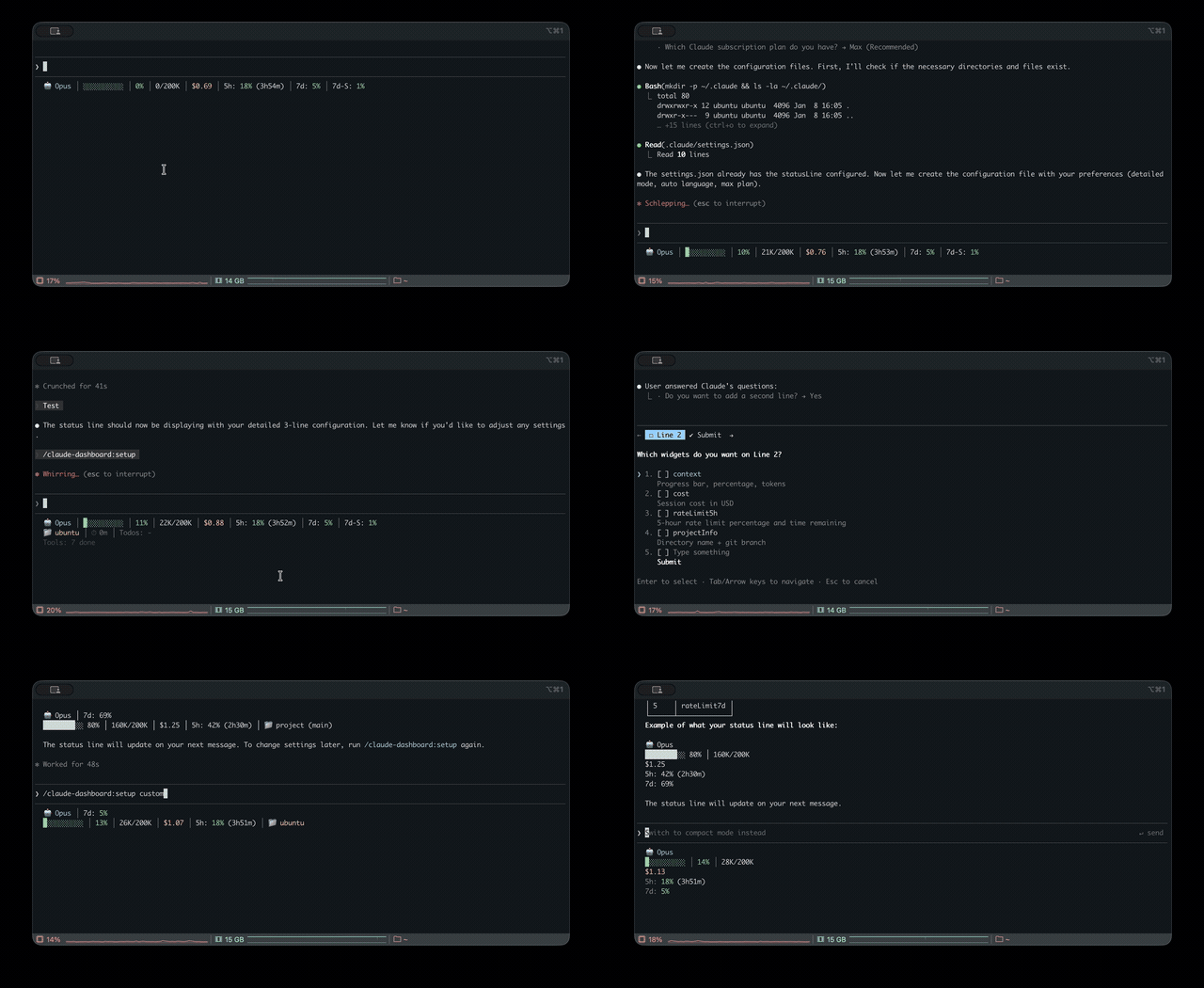
ruvnet@ruvnet
ruvnet/ruflo/tree/main/plugins/ruflo-agentdb
Ruflo 记忆系统的基底层插件:AgentDB 控制器桥接(15 个 agentdb_* MCP 工具)、RuVector ONNX 嵌入(10 个 embeddings_* 工具,包括 RaBitQ 32x 量化)和 WASM HNSW 模式路由器(3 个 ruvllm_hnsw_* 工具)。作为 mod(ADR-445):可选的安全召回会进入提示,写入守卫会把机密排除在记忆之外,还提供 /agentdb 和控制台显示的状态文件。
ruvnet/ruflo/tree/main/plugins/ruflo-agentdb
Ruflo 记忆系统的基底层插件。它把三组 CLI MCP 家族——agentdb_*(控制器桥接,15 个工具)、embeddings_*(RuVector ONNX 引擎,10 个工具)和 ruvllm_hnsw_*(WASM 支持的模式路由器,3 个工具)——包装成可发现的 skills 和命令。其他插件(ruflo-browser、ruflo-rag-memory、ruflo-intelligence)组合使用这个基底层;本插件负责整个基底层的命名空间约定和 smoke contract。
状态: ADR-0001 已实现。插件 v0.3.0 面向
@claude-flow/cliv3.6.x,内含agentdb@^3.0.0-alpha.11。smoke contract(13 项编号检查 + 3 项文档不变量)是验证机制,见 docs/adrs/0001-agentdb-optimization.md。
/plugin marketplace add ruvnet/ruflo
/plugin install ruflo-agentdb@ruflo
@claude-flow/cli v3.6 的主版本和次版本。v3.6 内的修订版本升级应当是无操作的。agentdb@^3.0.0-alpha.11。插件不会固定 npm package——内部版本(alpha.11 → alpha.12 等)不属于插件契约。bash plugins/ruflo-agentdb/scripts/smoke.sh)。如果它在你的 CLI 版本上通过,插件契约就成立。agentdb_* MCP 工具(分层存储/召回、语义路由、模式存储/搜索、因果边、上下文综合、批量操作、整合、反馈、工作阶段)。embeddings_* MCP 工具——384 维 ONNX(all-MiniLM-L6-v2)、HNSW 搜索、双曲线(Poincare)、神经基底层,以及 RaBitQ 1-bit 量化(内存减少 32×)。ruvllm_hnsw_* 工具(WASM 支持,最多 11 个高优先级模式——不同于大型嵌入 HNSW 路径)。agentdb_causal-edge(graph-node 后端,按 ADR-087 使用桥接后备)。本插件任何地方报告的“控制器数量”,都是运行时工具实际报告的数量。名称的规范列表是 v3/@claude-flow/memory/src/controller-registry.ts:34-73 中的 ControllerName 联合类型(跨 6 个初始化层级的 29 个名称)。运行时可这样查看:
mcp tool call agentdb_controllers --json
依照 ADR-053(controller-registry.ts:160-174)的初始化顺序:
| 层级 | 控制器 | 作用 |
|------:|-------------|------|
| 0 | (foundation, pre-existing) | 引导 |
| 1 | reasoningBank、hierarchicalMemory、learningBridge、hybridSearch、tieredCache | 核心智能 |
| 2 | memoryGraph、agentMemoryScope、vectorBackend、mutationGuard、gnnService | 图谱 + 安全 |
| 3 | skills、explainableRecall、reflexion、attestationLog、batchOperations、memoryConsolidation | 专项功能 |
| 4 | causalGraph、nightlyLearner、learningSystem、semanticRouter | 因果 + 路由 |
| 5 | graphTransformer、sonaTrajectory、contextSynthesizer、rvfOptimizer、mmrDiversityRanker、guardedVectorBackend | 高级服务 |
| 6 | federatedSession、graphAdapter | 工作阶段管理 |
graphAdapter 目前处于停用状态,等待外部 graph-DB 连接(由 ADR-095 跟踪)。其他第 2/3 层安全控制器(mutationGuard、attestationLog、gnnService、rvfOptimizer、guardedVectorBackend)由 ruflo 3.6.23+ 中的 ADR-095 G7 激活。
ADR-095 关闭了之前停用的 5 个 AgentDB 控制器:
| 控制器 | 作用 | 来源 |
|---|---|---|
| gnnService | 在 AgentDB 因果图上提供图神经网络嵌入和关系评分。无参数构造。 | agentdb/dist/src/services/GNNService.js |
| rvfOptimizer | RuVector 格式压缩——在持久化前对向量块量化并去重。 | agentdb/dist/src/optimizations/RVFOptimizer.js |
| mutationGuard | 面向状态变更的 WASM 支持证明生成(ADR-060)。 | agentdb/dist/src/security/MutationGuard.js |
| attestationLog | 变更的哈希链审计日志。由专用的 .swarm/attestation.db 支持。 | agentdb/dist/src/security/AttestationLog.js |
| GuardedVectorBackend | 用 mutationGuard + attestationLog 包装现有的 vectorBackend。 | agentdb/dist/src/backends/ruvector/GuardedVectorBackend.js |
/agentdb-mod — AgentDB 健康状态、控制器状态、工作阶段管理/embeddings — RuVector 嵌入引擎状态和操作agentdb-query — 使用语义路由和分层召回查询 AgentDBvector-search — HNSW 向量搜索 + RaBitQ 量化 + 3 个调优配置本插件负责下游插件使用的命名空间约定。遵循这个约定可以让跨插件搜索保持可发现,并避免桥接中意外的键冲突。
使用 kebab-case 的 <plugin-stem>-<intent>。已经在实际使用中的示例:
| 插件 | 命名空间 |
|---|---|
| ruflo-browser | browser-sessions、browser-selectors、browser-templates、browser-cookies |
| ruflo-rag-memory |(使用桥接目标 claude-memories) |
| ruflo-intelligence |(使用后备目标 pattern) |
| 命名空间 | 所有者 | 来源 |
|---|---|---|
| pattern | ReasoningBank 后备写入位置 | agentdb-tools.ts:144 |
| claude-memories | Claude Code 自动记忆桥接目标 | bridge |
| default | memory_store 默认值 | memory-tools.ts |
命名空间不是通用参数。请仔细阅读路由:
memory_* 和 embeddings_search 按命名空间路由——传入它。agentdb_hierarchical-* 按 tier(working|episodic|semantic)路由——命名空间参数会被忽略。agentdb_pattern-* 通过 ReasoningBank 控制器路由——命名空间参数会被忽略。agentdb_causal-edge 通过因果图路由——命名空间参数会被忽略。不要把 namespace: 'browser-cookies' 传给 agentdb_pattern-store,然后期待它筛选结果。这个参数会被静默丢弃。
本插件不会 GC 命名空间。需要生命周期管理的使用方插件(例如执行 purge 后的 browser-sessions)负责使用 memory_delete + agentdb_consolidate 自行删除。如果需要清理,请安排任务。
命名空间不应包含 :(会与桥接使用的键内部分隔符冲突),必须不超过 200 个字符,并且必须通过 validateIdentifier(与 agentdb-tools.ts:122 已使用的验证器相同)。
claude-memories 保留命名空间由 Claude Code 自己的自动记忆桥接填充,而不是由用户直接调用填充。有两种机制:
| 机制 | 触发器 | 写入内容 |
|---|---|---|
| memory_import_claude MCP 工具 | 手动或 hook 驱动 | 读取 ~/.claude/projects/*/memory/*.md,解析 YAML frontmatter,拆分章节,并用 384 维嵌入存储。allProjects: true 会从所有 Claude 项目导入。 |
| .claude/helpers/auto-memory-hook.mjs | SessionStart(导入)和 SessionEnd(同步)——接入 .claude/settings.json | import → 为当前项目调用桥接;sync → 将 AgentDB 洞察流回 ~/.claude/projects/*/memory/MEMORY.md |
查看或刷新:
# What's in the bridge right now?
mcp tool call memory_bridge_status --json

# Force a re-import from Claude Code's project memory
mcp tool call memory_import_claude --json -- '{"allProjects": true}'

# Cross-namespace search across claude-memories + auto-memory + patterns + tasks + feedback
mcp tool call memory_search_unified --json -- '{"query": "your query"}'
memory_search_unified 默认搜索 ['default', 'claude-memories', 'auto-memory', 'patterns', 'tasks', 'feedback']——这些是桥接实际填充的命名空间。default 命名空间是总括项;auto-memory 不同于 claude-memories(auto-memory 保存桥接内部缓存,claude-memories 保存解析后的 *.md 章节)。
复数化陷阱: ReasoningBank 后备会写入
pattern(单数)。其他 hooks(pretrain、神经训练路径)会写入patterns(复数)。它们是不同的命名空间。如有疑问,分别运行memory_list --namespace pattern和memory_list --namespace patterns,就能知道数据在哪。确认实际写入位置前,不要为了“修正”复数化而重构下游代码。
多个 Claude Code hook 会向 AgentDB 写入内容。使用方插件应了解哪些命名空间会自动累积状态,哪些需要显式调用,这样就不会重复实现 hook 系统已经提供的功能。
| Hook | 调用的工具 | 目标命名空间 | 说明 |
|------|--------------|----------|-------|
| SessionStart | memory_import_claude(通过 auto-memory-hook.mjs) | claude-memories | 每次工作阶段开始时,将 ~/.claude/projects/*/memory/*.md 导入 AgentDB |
| SessionEnd | auto-memory-hook.mjs sync | bridge → MEMORY.md | 将 AgentDB 洞察流回 Claude Code 的 MEMORY.md |
| post-task --train-neural | agentdb_pattern-store(ReasoningBank) | pattern(注册表不可用时使用 memory-store-fallback) | 保存任务完成模式,用于 SONA 提炼 |
| pretrain(one-shot) | memory_store | patterns(复数) | 引导学习语料 |
| trajectory-begin/step/end(ruvector hooks) | ruvector 基底层(单独插件) | 由 ruflo-ruvector 处理的 sona/agentdb 命名空间 | 见 plugins/ruflo-ruvector/docs/adrs/0001-pin-ruvector-0.2.25.md |
对使用方插件的含义:
hooks post-task --train-neural,就不需要再手动调用 memory_store --namespace pattern。选择一条路径。claude-memories。 它会在每次 SessionStart 时自动导入。手动调用 memory_import_claude 只用于强制刷新,不用于正常运行。agentdb_pattern-store 返回 controller: 'memory-store-fallback' 时,数据仍然已经写入——见下方“Pattern-store fallback”。桥接代码中有 3 个后备;使用方应针对这些情况分支处理,不要把它们当作软失败。
当 ReasoningBank 控制器注册表返回 null 时,agentdb_pattern-store 会写入 memory_store,并返回:
{
  "success": true,
  "patternId": "pattern-...",
  "controller": "memory-store-fallback",
  "note": "ReasoningBank controller registry unavailable. Pattern persisted via memory_store."
}
controller: 'memory-store-fallback' 响应表示模式已经持久化,不是错误。来源:agentdb-tools.ts:138-161。
agentdb_causal-edge 会先尝试原生 @ruvector/graph-node 后端;失败后退回桥接。当原生后端处理请求时,响应会包含 _graphNodeBackend: true。来源:agentdb-tools.ts:267-290。
当 bridgeHealthCheck() 返回 null(未安装 @claude-flow/memory package,或者缺少 controller-registry.ts)时,每个 agentdb_* handler 都会返回:
{
  "success": false,
  "error": "AgentDB bridge not available — @claude-flow/memory not installed... Use memory_store/memory_search tools instead."
}
桥接不可用模式的替代表:
| 不可用的 agentdb_* | 改用 |
|---|---|
| agentdb_hierarchical-store / _recall | memory_store / memory_search |
| agentdb_pattern-store / _search | memory_store --namespace pattern / memory_search --namespace pattern |
请先查看作者 README 确认 marketplace 和插件名称;命令可能随仓库结构改变。
claude plugin marketplace add ruvnet/ruflo
claude plugin install ruflo-agentdb
The substrate plugin for Ruflo memory. Wraps three CLI MCP families — agentdb_* (controller bridge, 15 tools), embeddings_* (RuVector ONNX engine, 10 tools), and ruvllm_hnsw_* (WASM-backed pattern router, 3 tools) — into discoverable skills and commands. Other plugins (ruflo-browser, ruflo-rag-memory, ruflo-intelligence) compose this substrate; this plugin owns the namespace convention and the smoke contract for the substrate as a whole.
Status: ADR-0001 implemented. Plugin v0.3.0 targets
@claude-flow/cliv3.6.x with bundledagentdb@^3.0.0-alpha.11. The smoke contract (13 numbered checks + 3 documentation invariants) is the verification mechanism — see docs/adrs/0001-agentdb-optimization.md.
/plugin marketplace add ruvnet/ruflo
/plugin install ruflo-agentdb@ruflo
@claude-flow/cli v3.6 major+minor. Patch bumps within v3.6 are expected to be no-op.agentdb@^3.0.0-alpha.11. The plugin does not pin the npm package — internals (alpha.11 → alpha.12 etc.) are not the plugin's contract.bash plugins/ruflo-agentdb/scripts/smoke.sh). If smoke passes against your CLI version, the plugin's contract holds.agentdb_* MCP tools (hierarchical store/recall, semantic routing, pattern store/search, causal edges, context synthesis, batch ops, consolidation, feedback, sessions).embeddings_* MCP tools — 384-dim ONNX (all-MiniLM-L6-v2), HNSW search, hyperbolic (Poincare), neural substrate, and RaBitQ 1-bit quantization (32× memory reduction).ruvllm_hnsw_* tools (WASM-backed, ≤11 high-priority patterns — distinct from the large-scale embeddings HNSW path).agentdb_causal-edge (graph-node backend with bridge fallback per ADR-087).The "controller count" reported anywhere in this plugin is whatever the runtime tool reports. The canonical list of names is the ControllerName union at v3/@claude-flow/memory/src/controller-registry.ts:34-73 (29 names across 6 init levels). Inspect at runtime:
mcp tool call agentdb_controllers --json
Initialization order per ADR-053 (controller-registry.ts:160-174):
| Level | Controllers | Role |
|------:|-------------|------|
| 0 | (foundation, pre-existing) | Bootstrap |
| 1 | reasoningBank, hierarchicalMemory, learningBridge, hybridSearch, tieredCache | Core intelligence |
| 2 | memoryGraph, agentMemoryScope, vectorBackend, mutationGuard, gnnService | Graph + security |
| 3 | skills, explainableRecall, reflexion, attestationLog, batchOperations, memoryConsolidation | Specialization |
| 4 | causalGraph, nightlyLearner, learningSystem, semanticRouter | Causal + routing |
| 5 | graphTransformer, sonaTrajectory, contextSynthesizer, rvfOptimizer, mmrDiversityRanker, guardedVectorBackend | Advanced services |
| 6 | federatedSession, graphAdapter | Session management |
graphAdapter is currently disabled pending an external graph-DB connection (tracked in ADR-095). Other Level-2/3 security controllers (mutationGuard, attestationLog, gnnService, rvfOptimizer, guardedVectorBackend) were activated by ADR-095 G7 in ruflo 3.6.23+.
ADR-095 closed five previously-disabled AgentDB controllers:
| Controller | Role | Source |
|---|---|---|
| gnnService | Graph Neural Network embeddings + relational scoring over the AgentDB causal graph. No-arg construction. | agentdb/dist/src/services/GNNService.js |
| rvfOptimizer | RuVector format compaction — quantizes + dedupes vector blocks before persistence. | agentdb/dist/src/optimizations/RVFOptimizer.js |
| mutationGuard | WASM-backed proof generation for state mutations (ADR-060). | agentdb/dist/src/security/MutationGuard.js |
| attestationLog | Hash-chained audit log of mutations. Backed by a dedicated .swarm/attestation.db. | agentdb/dist/src/security/AttestationLog.js |
| GuardedVectorBackend | Wraps the existing vectorBackend with mutationGuard + attestationLog. | agentdb/dist/src/backends/ruvector/GuardedVectorBackend.js |
/agentdb-mod — AgentDB health, controller status, session management/embeddings — RuVector embedding engine status and operationsagentdb-query — Query AgentDB with semantic routing and hierarchical recallvector-search — HNSW vector search + RaBitQ quantization + 3 tuning profilesThis plugin owns the namespace convention that downstream plugins consume. Following it keeps cross-plugin search discoverable and avoids accidental key collisions in the bridge.
<plugin-stem>-<intent> in kebab-case. Examples already in the wild:
| Plugin | Namespaces |
|---|---|
| ruflo-browser | browser-sessions, browser-selectors, browser-templates, browser-cookies |
| ruflo-rag-memory | (uses bridge target claude-memories) |
| ruflo-intelligence | (uses fallback target pattern) |
| Namespace | Owned by | Source |
|---|---|---|
| pattern | ReasoningBank fallback writes here | agentdb-tools.ts:144 |
| claude-memories | Claude Code auto-memory bridge target | bridge |
| default | memory_store default | memory-tools.ts |
Namespace is not a universal parameter. Read the routing carefully:
memory_* and embeddings_search route by namespace — pass it.agentdb_hierarchical-* routes by tier (working|episodic|semantic) — namespace argument is ignored.agentdb_pattern-* routes through the ReasoningBank controller — namespace argument is ignored.agentdb_causal-edge routes through the causal graph — namespace argument is ignored.Don't pass namespace: 'browser-cookies' to agentdb_pattern-store and expect filtering. It will be silently dropped.
This plugin does not GC namespaces. Consumer plugins that want lifecycle (e.g., browser-sessions after a purge) own their own deletion via memory_delete + agentdb_consolidate. If you need cleanup, schedule it.
A namespace SHOULD NOT contain : (collides with key-internal delimiters used in the bridge), MUST be ≤200 chars, and MUST pass validateIdentifier (the same validator already used in agentdb-tools.ts:122).
The claude-memories reserved namespace is filled by Claude Code's own auto-memory bridge, not by direct user calls. Two mechanisms:
| Mechanism | Trigger | What it writes |
|---|---|---|
| memory_import_claude MCP tool | Manual or hook-driven | Reads ~/.claude/projects/*/memory/*.md, parses YAML frontmatter, splits sections, stores with 384-dim embeddings. allProjects: true imports from ALL Claude projects. |
| .claude/helpers/auto-memory-hook.mjs | SessionStart (import) and SessionEnd (sync) — wired in .claude/settings.json | import → calls into the bridge for the current project; sync → flows AgentDB insights back to ~/.claude/projects/*/memory/MEMORY.md |
To inspect or refresh:
# What's in the bridge right now?
mcp tool call memory_bridge_status --json

# Force a re-import from Claude Code's project memory
mcp tool call memory_import_claude --json -- '{"allProjects": true}'

# Cross-namespace search across claude-memories + auto-memory + patterns + tasks + feedback
mcp tool call memory_search_unified --json -- '{"query": "your query"}'
memory_search_unified defaults to searching ['default', 'claude-memories', 'auto-memory', 'patterns', 'tasks', 'feedback'] — these are the namespaces the bridge actually populates. The default namespace is the catch-all; auto-memory is distinct from claude-memories (auto-memory holds bridge-internal cache, claude-memories holds parsed *.md sections).
Pluralization gotcha: the ReasoningBank fallback writes to
pattern(singular). Other hooks (hooks pretrain, neural training paths) write topatterns(plural). They are different namespaces. When in doubt,memory_list --namespace patternandmemory_list --namespace patternswill tell you which one your data is in. Don't refactor your downstream code to "fix" the pluralization until you've confirmed which namespace was actually written.
Several Claude Code hooks fire writes into AgentDB. Consumer plugins should know which namespaces accumulate state automatically vs. by explicit call, so they don't rebuild what the hook system already provides.
| Hook | Tool invoked | Target namespace | Notes |
|------|--------------|------------------|-------|
| SessionStart | memory_import_claude (via auto-memory-hook.mjs) | claude-memories | Imports ~/.claude/projects/*/memory/*.md into AgentDB on every session start |
| SessionEnd | auto-memory-hook.mjs sync | bridge → MEMORY.md | Flows AgentDB insights back to Claude Code's MEMORY.md |
| post-task --train-neural | agentdb_pattern-store (ReasoningBank) | pattern (with memory-store-fallback if registry unavailable) | Stores task-completion patterns for SONA distillation |
| pretrain (one-shot) | memory_store | patterns (plural) | Bootstrap learning corpus |
| trajectory-begin/step/end (ruvector hooks) | ruvector substrate (separate plugin) | sona/agentdb namespaces handled by ruflo-ruvector | See plugins/ruflo-ruvector/docs/adrs/0001-pin-ruvector-0.2.25.md |
Implication for consumer plugins:
hooks post-task --train-neural, you don't also need to manually memory_store --namespace pattern. Pick one path.claude-memories yourself. It auto-imports on every SessionStart. Manual memory_import_claude is for force-refresh, not steady-state.controller: 'memory-store-fallback' comes back from agentdb_pattern-store, the data still landed — see "Pattern-store fallback" below.Three fallbacks exist in the bridge code; consumers should branch on them rather than treat them as soft failures.
When the ReasoningBank controller registry returns null, agentdb_pattern-store writes through to memory_store and returns:
{
  "success": true,
  "patternId": "pattern-...",
  "controller": "memory-store-fallback",
  "note": "ReasoningBank controller registry unavailable. Pattern persisted via memory_store."
}
A controller: 'memory-store-fallback' response is a pattern that was persisted — not an error. Source: agentdb-tools.ts:138-161.
agentdb_causal-edge tries the native @ruvector/graph-node backend first; on failure, falls back to the bridge. The response includes _graphNodeBackend: true when the native backend handled the call. Source: agentdb-tools.ts:267-290.
When bridgeHealthCheck() returns null (the @claude-flow/memory package is not installed or controller-registry.ts is missing), every agentdb_* handler returns:
{
  "success": false,
  "error": "AgentDB bridge not available — @claude-flow/memory not installed... Use memory_store/memory_search tools instead."
}
Replacement table for bridge-unavailable mode:
| Unavailable agentdb_* | Use instead |
|---|---|
| agentdb_hierarchical-store / _recall | memory_store / memory_search |
| agentdb_pattern-store / _search | memory_store --namespace pattern / memory_search --namespace pattern |
| agentdb_semantic-route | embeddings_search |
| agentdb_context-synthesize | memory_search_unified |
bash plugins/ruflo-agentdb/scripts/smoke.sh
# Expected: "10 passed, 0 failed"
The smoke script is the contract. It calls each documented MCP tool, exercises the RaBitQ workflow, and source-inspects the fallback path (no env-var gate exists to force the fallback live).
A function-hook mod ships beside the skills. Needs a Claude Code with mods (2.1.287+); older builds ignore it.
| Piece | Default | What it does |
|---|---|---|
| Secret guard | on | Refuses a memory write (agentdb_hierarchical-store, agentdb_pattern-store, agentdb_batch, agentdb_causal-edge, memory_store, hooks_remember, hooks_intelligence_pattern-store, agentdb_feedback, agentdb_session-end, hive-mind_memory, session_save) that holds a private key, cloud/GitHub/Slack token, bearer token, JWT or key-like assignment. The secret is never echoed. The shared screen (hooks/screen.ts, copied to every mod by scripts/sync-mod-screen.mjs) judges an assignment by its value: calls, env references, identifier paths, placeholders, UUIDs, secret-manager paths and hyphenated names are not secrets; a literal needs two character classes (one a digit or symbol) and at least 2.5 bits of entropy per character. Vendor keys (Stripe, npm, HuggingFace, SendGrid, Twilio, Slack webhooks) and scheme://user:pass@host URLs are matched by shape; input is scanned in one pass up to 200 KB (head and tail beyond that). |
| Import file screen | on (with the guard) | memory_import takes only a path, so the guard also reads the file at inputPath and refuses the import when it holds a secret (same message, never echoing it). Best effort, not a gate, and it fails open: a file over 1 MB, a directory, a missing or unreadable file, a path outside the project root and your home, a path with .., a backslash or a null byte, a non-string path, or a stat/read error all let the import proceed unread. Symlinks are not resolved. rvf_ingest is still unguarded. |
| Recall into prompts | off | Attaches the best 1–5 memories to each prompt as framed, per-prompt context (the prompt cache is not disturbed). Read through the already-connected tools, in order: memory_search (semantic: the only reader that finds a paraphrase; its 60-character cut is completed with memory_retrieve), agentdb_hierarchical-recall and agentdb_pattern-search (substring matches, so also asked with the prompt's salient words), ruvector hooks_recall. A result scoring under 0.25 is noise and skipped. No CLI, no network. Skipped for slash commands, ! lines and short prompts; gives up after recallDeadlineMs (800; the first recall of a fresh session takes 0.5–1.5 s, so consider 1500); cached 10 minutes. |
| Untrusted memory | always | A retrieved memory with a secret or an instruction-to-the-model phrase is dropped; the rest are control-character-stripped, capped (5 items, 400 chars each, 1500 total) and framed as data. |
| /agentdb-mod | — | status, recall <text>, scan <text>, recent; answered locally, no model call. |
| Status file | — | .claude-flow/agentdb-mod/status.json (counts and short snippets); the ruflo console's Memory page shows it. |
Permissions: the mod's reads go through Claude Code's permission rules, and a headless (-p) or fresh session refuses a tool nobody allowed. Allow the readers you use, e.g. mcp__<server>__memory_search, memory_retrieve, agentdb_hierarchical-recall, agentdb_pattern-search. A refusal is counted in errors and named in lastError in the status file; before 0.4.1 it read as "nothing relevant".
Options (userConfig): recall off|on, recallLimit 1–5, recallDeadlineMs 200–3000, guard on|off, source auto|agentdb|ruvector|none.
claude plugin test plugins/ruflo-agentdb      # 109 tests: screening, recall, reader fallback, guard, /agentdb-mod, deadline, cache, live-run findings
scripts/live-agentdb-recall.sh                 # live harness against a real AgentDB (haiku, about $1); results in v3/docs/validation/agentdb-recall-live-2026-10.md
node plugins/ruflo-agentdb/scripts/bench.mjs  # per-call cost of the pure paths (tens of µs)
ADR-445 — AgentDB as a modADR-0001 — Optimize ruflo-agentdb (accurate surface, RaBitQ, namespacing, smoke contract)ruflo-rag-memory — simple store/search/recall interface; consumes the claude-memories reserved namespaceruflo-intelligence — SONA neural patterns; consumes the pattern reserved namespace via ReasoningBankruflo-browser — composes the namespace convention for browser-sessions/-selectors/-templates/-cookies (ADR-0001 §3 there)ruflo-ruvector — pinned ruvector CLI; sibling substrate pluginMIT

data-goblin/power-bi-agentic-development Claude Code 插件 marketplace 中的 Fabric Data App 插件,被描述为跟随 rayfin CLI 的面板。

在提示列上方、状态行和 toast 中显示未读 AMP 消息,并可唤醒空闲的 Claude Code 工作階段来读取。需要 Claude Code 2.1.287 或更高版本。
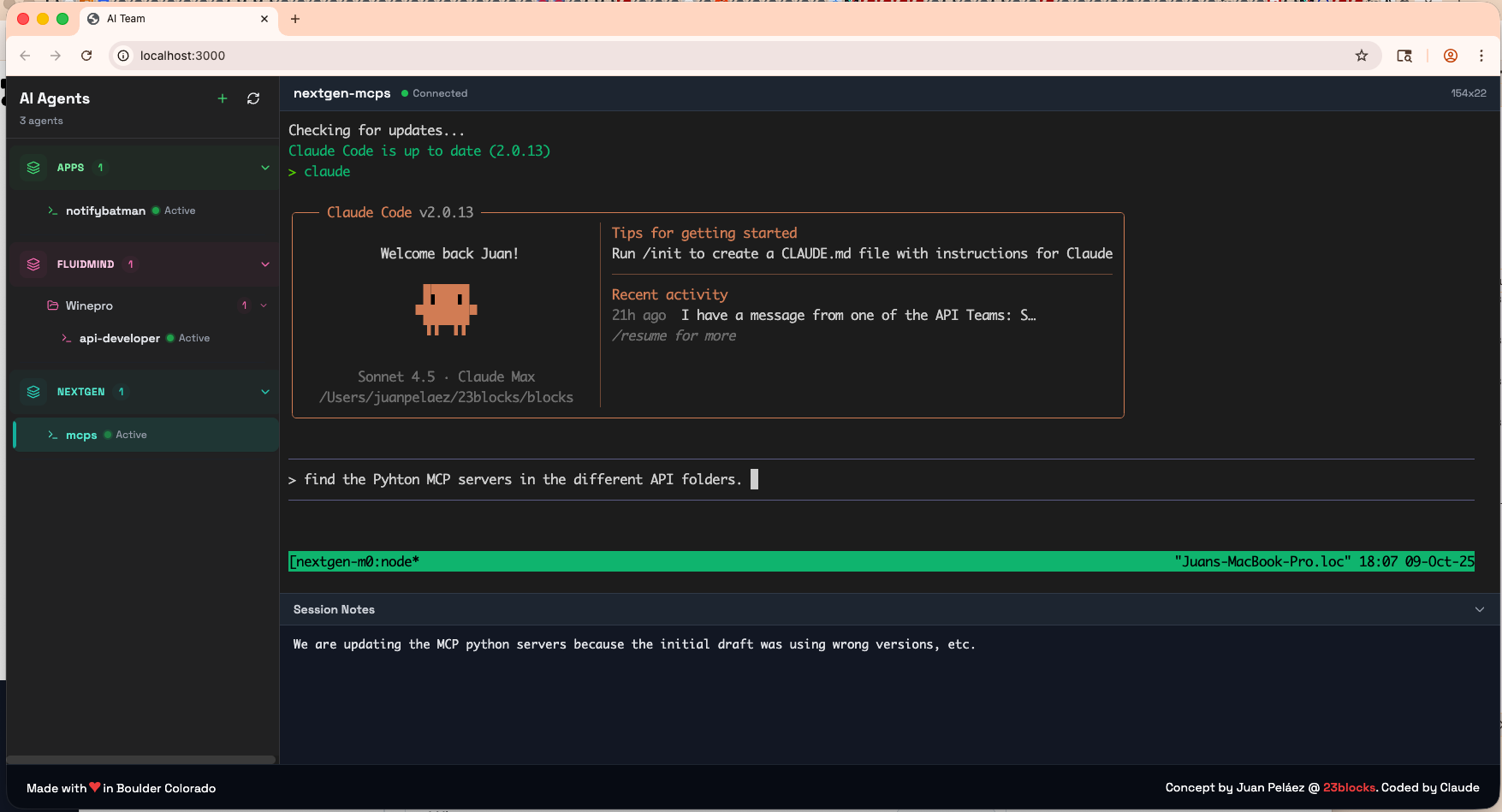

Claude Code 的统一状态行,用于监控多 CLI(Claude、Codex、Gemini、Antigravity、z.ai)的用量、上下文、速率限制和成本追踪