
isr431@isr431
isr431/desk-pet

A small animated pet that lives beside your Claude Code session and reacts to what Claude is doing, so long sessions are more fun to glance at.
isr431/desk-pet
A small animated pet that lives beside your Claude Code session and reacts to what Claude is doing, so long sessions are more fun to glance at.

Pick an axolotl, quokka, tiny robot, dog or cat. Each one has its own take on every reaction.
| When | Your pet | |---|---| | A turn starts | wakes up and stretches | | Claude reads files | reads a tiny book | | Claude edits code | hammers (quokka, robot, dog) or knits (axolotl, cat) | | Claude runs a shell command | types furiously at a mini keyboard | | Claude searches or fetches the web | peers through binoculars | | Tests pass | dances in a shower of confetti | | Tests fail | hides behind a rock, then peeks out | | A turn runs 5+ minutes | gets bored: yawns, plays with yarn, builds a sandcastle | | Claude needs your input | waves until you respond | | A turn finishes | brings you a little trophy or envelope | | Context compaction | tidies its room, stacking boxes | | Nothing happening | breathes and blinks |
Your pet lives in a little pixel room (wallpaper, a curtained window, a pendant lamp, a wooden floor and a rug) that follows your local time of day: a pink sunrise at dawn (5–7), blue skies and drifting clouds in the morning (7–11) and at noon (11–14), golden light in the afternoon (14–17), a sunset in the evening (17–20), and a starry night with the lamp glowing (20–5). Sunlight through the window falls across the floor and shifts with the sun, and the caption's idle icon changes with the hour. It's drawn with half-block pixels in the terminal (48 columns by 12 rows) and as an animated SVG in the Claude desktop app.
You choose where it sits:
/desk-pet show brings it back. A terminal opens the panel by itself only when it's at least 144 columns wide.In Claude Code, add this repository as a plugin marketplace, then install the plugin:
/plugin marketplace add isr431/desk-pet
/plugin install desk-pet@desk-pet
Or from a shell:
claude plugin marketplace add isr431/desk-pet
claude plugin install desk-pet@desk-pet
Start a new session and your pet appears. Run /desk-pet to pick your pet and settings.
Desk Pet is a function-hooks plugin. It needs Claude Code 2.1.286 or newer. The function-hooks API is early access, so a future release may change it.
To try it from a local checkout without installing:
claude --plugin-dir /path/to/desk-pet
You can change these in three places:
/desk-pet opens a settings pane with a preview button for each reaction./desk-pet cat (or axolotl, quokka, robot, dog) switches pets./desk-pet show reopens the side panel./config in the terminal lists every setting as a "Desk Pet: …" row. Pet and position are typed there as text (axolotl, quokka, robot, dog, cat; panel, above); anything else falls back to the default./desk-pet demo plays every reaction in turn, which is handy for a screenshot or a GIF.
npm test, pytest, go test, cargo test, vitest, jest, rspec and similar). A non-zero exit counts as a failure.AskUserQuestion and plan approval. Permission prompts and MCP elicitations are noticed through Claude Code's notification event, the same one that drives desktop notifications. The pet stops waving when you send a prompt or when the tool call it was waiting on finishes. One known gap: after you approve a long-running command, the pet keeps waving until that command ends, because the hooks API has no event for the moment a prompt is answered.Privacy policy: the disclosure below describes the mod’s data handling.
Desk Pet only watches what Claude is doing and draws a pet. It makes no network requests, reads no files, runs no commands, and keeps no data of its own between sessions.
Hooks. Every hook looks, then passes the event on unchanged. None of them approves, blocks or rewrites anything.
| Hook | What it reads | Why |
|---|---|---|
| session.start | nothing | starts the animation, opens the side panel and registers /desk-pet |
| prompt.submit | nothing, not even your prompt's text | stops the "needs input" wave as soon as you reply |
| turn.start, turn.complete | whether the turn ended with an answer, and whether it was a subagent's | wake-up, boredom after 5 minutes, the end-of-turn gift |
| tool.call | the tool's name, plus a file's name (never its contents), a search pattern or query, a URL's host, the first ~38 characters of a shell command, and whether the call failed | picks the reaction and its caption, and spots test runs and whether they passed |
| session.compact | whether it was a subagent's, or a background precompute | the tidying-up reaction |
| classic.Notification | the notification's type only (permission_prompt or elicitation_dialog) | starts the "needs input" wave |
| classic.PermissionDenied | nothing | stops the wave when a prompt is refused |
| command.run | what you typed after /desk-pet | the command |
| ui.render | the surface and the space available | draws the pet |
Captions appear on your screen only. The current caption is held in memory for the session ($.state) so the panel can redraw it. It is never written to disk or sent anywhere.
Settings it writes. Desk Pet changes a setting only when you ask: a button in the /desk-pet settings pane, or /desk-pet cat (or another pet). Each write is to one of Desk Pet's own settings (desk-pet.pet, desk-pet.position, desk-pet.sound or a desk-pet.react_… switch), which Claude Code saves in your settings file under pluginConfigs, exactly as /config would. It never touches any other setting, permission or environment variable.
Sound. Off by default. When on, it plays a short chime that it synthesizes in code.
In the "above the prompt" position, press ctrl+x ctrl+a to collapse the card in the terminal.
claude plugin validate .
claude plugin test .
The pixel art lives in hooks/art.ts. It's plain TypeScript with no engine calls, so you can import it under Node to render previews.
MIT
Check the author's README for the marketplace and plugin name first. Commands may change as the repository evolves.
claude plugin marketplace add isr431/desk-pet
claude plugin install desk-pet
A small animated pet that lives beside your Claude Code session and reacts to what Claude is doing, so long sessions are more fun to glance at.
Pick an axolotl, quokka, tiny robot, dog or cat. Each one has its own take on every reaction.
| When | Your pet | |---|---| | A turn starts | wakes up and stretches | | Claude reads files | reads a tiny book | | Claude edits code | hammers (quokka, robot, dog) or knits (axolotl, cat) | | Claude runs a shell command | types furiously at a mini keyboard | | Claude searches or fetches the web | peers through binoculars | | Tests pass | dances in a shower of confetti | | Tests fail | hides behind a rock, then peeks out | | A turn runs 5+ minutes | gets bored: yawns, plays with yarn, builds a sandcastle | | Claude needs your input | waves until you respond | | A turn finishes | brings you a little trophy or envelope | | Context compaction | tidies its room, stacking boxes | | Nothing happening | breathes and blinks |
Your pet lives in a little pixel room (wallpaper, a curtained window, a pendant lamp, a wooden floor and a rug) that follows your local time of day: a pink sunrise at dawn (5–7), blue skies and drifting clouds in the morning (7–11) and at noon (11–14), golden light in the afternoon (14–17), a sunset in the evening (17–20), and a starry night with the lamp glowing (20–5). Sunlight through the window falls across the floor and shifts with the sun, and the caption's idle icon changes with the hour. It's drawn with half-block pixels in the terminal (48 columns by 12 rows) and as an animated SVG in the Claude desktop app.
You choose where it sits:
/desk-pet show brings it back. A terminal opens the panel by itself only when it's at least 144 columns wide.In Claude Code, add this repository as a plugin marketplace, then install the plugin:
/plugin marketplace add isr431/desk-pet
/plugin install desk-pet@desk-pet
Or from a shell:
claude plugin marketplace add isr431/desk-pet
claude plugin install desk-pet@desk-pet
Start a new session and your pet appears. Run /desk-pet to pick your pet and settings.
Desk Pet is a function-hooks plugin. It needs Claude Code 2.1.286 or newer. The function-hooks API is early access, so a future release may change it.
To try it from a local checkout without installing:
claude --plugin-dir /path/to/desk-pet
You can change these in three places:
/desk-pet opens a settings pane with a preview button for each reaction./desk-pet cat (or axolotl, quokka, robot, dog) switches pets./desk-pet show reopens the side panel./config in the terminal lists every setting as a "Desk Pet: …" row. Pet and position are typed there as text (axolotl, quokka, robot, dog, cat; panel, above); anything else falls back to the default./desk-pet demo plays every reaction in turn, which is handy for a screenshot or a GIF.
npm test, pytest, go test, cargo test, vitest, jest, rspec and similar). A non-zero exit counts as a failure.AskUserQuestion and plan approval. Permission prompts and MCP elicitations are noticed through Claude Code's notification event, the same one that drives desktop notifications. The pet stops waving when you send a prompt or when the tool call it was waiting on finishes. One known gap: after you approve a long-running command, the pet keeps waving until that command ends, because the hooks API has no event for the moment a prompt is answered.Privacy policy: the disclosure below describes the mod’s data handling.
Desk Pet only watches what Claude is doing and draws a pet. It makes no network requests, reads no files, runs no commands, and keeps no data of its own between sessions.
Hooks. Every hook looks, then passes the event on unchanged. None of them approves, blocks or rewrites anything.
| Hook | What it reads | Why |
|---|---|---|
| session.start | nothing | starts the animation, opens the side panel and registers /desk-pet |
| prompt.submit | nothing, not even your prompt's text | stops the "needs input" wave as soon as you reply |
| turn.start, turn.complete | whether the turn ended with an answer, and whether it was a subagent's | wake-up, boredom after 5 minutes, the end-of-turn gift |
| tool.call | the tool's name, plus a file's name (never its contents), a search pattern or query, a URL's host, the first ~38 characters of a shell command, and whether the call failed | picks the reaction and its caption, and spots test runs and whether they passed |
| session.compact | whether it was a subagent's, or a background precompute | the tidying-up reaction |
| classic.Notification | the notification's type only (permission_prompt or elicitation_dialog) | starts the "needs input" wave |
| classic.PermissionDenied | nothing | stops the wave when a prompt is refused |
| command.run | what you typed after /desk-pet | the command |
| ui.render | the surface and the space available | draws the pet |
Captions appear on your screen only. The current caption is held in memory for the session ($.state) so the panel can redraw it. It is never written to disk or sent anywhere.
Settings it writes. Desk Pet changes a setting only when you ask: a button in the /desk-pet settings pane, or /desk-pet cat (or another pet). Each write is to one of Desk Pet's own settings (desk-pet.pet, desk-pet.position, desk-pet.sound or a desk-pet.react_… switch), which Claude Code saves in your settings file under pluginConfigs, exactly as /config would. It never touches any other setting, permission or environment variable.
Sound. Off by default. When on, it plays a short chime that it synthesizes in code.
In the "above the prompt" position, press ctrl+x ctrl+a to collapse the card in the terminal.
claude plugin validate .
claude plugin test .
The pixel art lives in hooks/art.ts. It's plain TypeScript with no engine calls, so you can import it under Node to render previews.
MIT

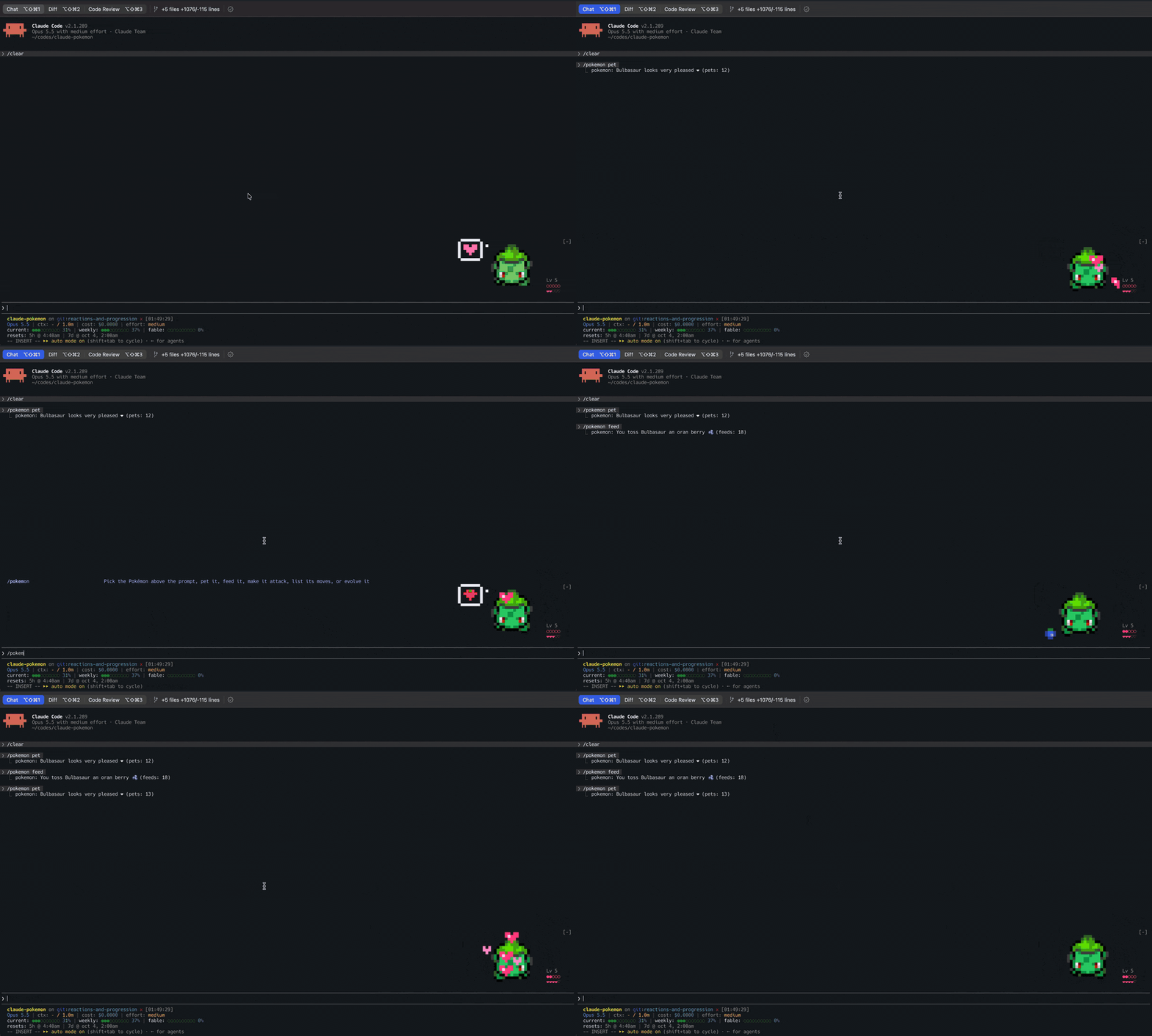
A pixel Pokémon that lives above your Claude Code prompt and reacts to everything Claude does.

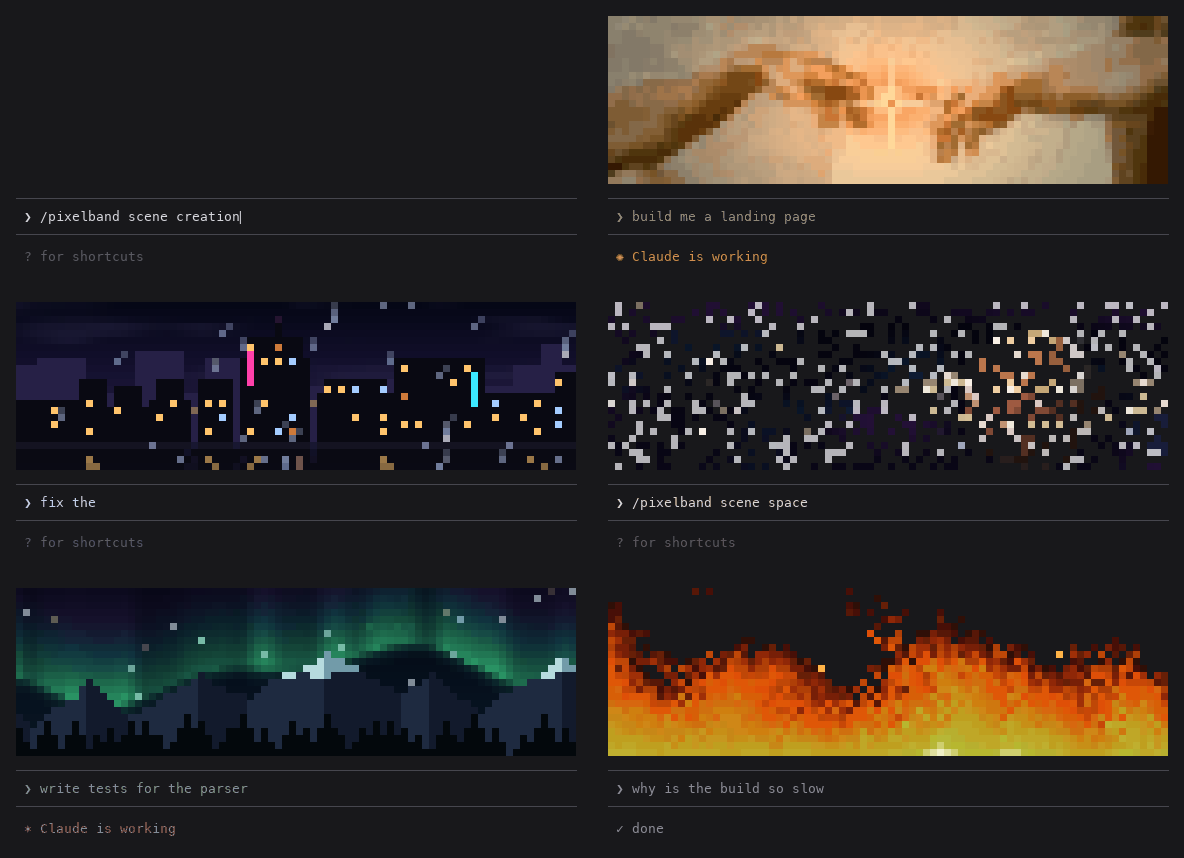
Animated pixel art above your Claude Code prompt that reacts while Claude works: seven scenes, or your own image or GIF. Zero tokens.

A Claude Code terminal mod that redraws assistant replies, tool rows and the turn footer inside the TUI with colored commands, content-fit code cards, diff cards, borderless tables and a subagent band.