NotTahaAli@NotTahaAli
NotTahaAli/sessclone/tree/main/packages/plugin
将 token、模型和花费使用量报告给 SessClone 部署的 Claude Code 插件,提供状态栏、斜杠命令和可选择启用的转录上传。
NotTahaAli/sessclone/tree/main/packages/plugin
SessClone Collector 会将 Claude Code 的使用情况(token、模型、成本输入和耗时)报告给 SessClone 部署,让个人和组织能够按人员、Project、Device 和 Session 查看花费。它包含 hooks(SessionStart、Stop、StopFailure、SessionEnd)、状态栏行,以及 /sessclone-status 和 /sessclone-sync 命令;mod 还提供 /sessclone:status 和 /sessclone:sync 作为后备。每轮只通过 HTTPS 发送带 bearer key 的元数据;除非启用可选择的转录上传,否则不会发送提示、回复或文件内容。需要 Node 22.18+(或 23.6+、24)。采用 MIT 授权。
请先查看作者 README 确认 marketplace 和插件名称;命令可能随仓库结构改变。
claude plugin marketplace add NotTahaAli/sessclone
claude plugin install sessclone
The SessClone Collector. It reports your Claude Code usage (tokens, models, cost inputs, timings) to a SessClone deployment, so you and your Org can see spend per person, Project, Device and Session on the dashboard.
/plugin marketplace add NotTahaAli/sessclone
/plugin install sessclone@sessclone
Claude Code asks for two things, both optional:
settings.json. Leave it empty in a Claude Code
cloud environment whose SessClone API credential adds it.https://sessclone.com. Self-hosted deployments enter their own address.Restart Claude Code. The next session says whether it connected, and which Org it reports to. Turns from before the install are backfilled from the transcripts Claude Code still keeps.
Requires Node 22.18 or newer (or 23.6+, or 24).
/sessclone-status shows what the last session start found: the
deployment, the key's first three characters and length, whether it was
accepted and for which Org, plus this Device, how many of this session's
Turns are not sent yet, what is waiting to send and the last push./sessclone-sync sends everything waiting now, without a Claude turn, and
says what it sent.↗,
which opens this session in the dashboard.These are the plugin's mod (hooks/register.tsx), which needs Claude Code
2.1.287 or newer. Where mods cannot load, /sessclone:status and
/sessclone:sync do the same, except that status leaves out this session's
unsent Turns, and sync is carried out by the hook that ends that turn.
Everything goes over HTTPS to the deployment URL above, with your key as a bearer token, except the opt-in transcript upload described last.
SessionStart): GET /api/ingest to ask whether the key
is accepted and for which Org. If it is not, the plugin says so and sends
nothing else until a session starts with a key that is. Then it re-sends
what an earlier session could not (POST /api/ingest).Stop): POST /api/ingest with, per Turn, the token counts
by kind, the model, timings, the Session, Project and Device it belongs to,
the working directory, the git branch, and the git remote reduced to a
Project key. No prompt, no reply, no file contents.StopFailure, SessionEnd): POST /api/ingest saying
that a turn ended on an API error, or that a session ended.POST /api/logs/presign), uploads the
compressed transcript to that URL, which is the deployment's object storage
(Supabase Storage for the hosted service), and confirms it
(POST /api/logs/confirm). Your Org's retention removes it.~/.claude/projects/ (or
CLAUDE_CONFIG_DIR), from a cursor, so each turn costs a few hundred bytes.git in the session's working directory, to read the branch and remote.~/.local/state/sessclone, ~/Library/Application Support/sessclone, or
%LOCALAPPDATA%\sessclone).HTTPS_PROXY is set, each hook restarts itself once under Node's own
proxy support so its requests go through that proxy.The API key is read only from the plugin's setup prompt, never from your shell environment, and never written to a log, a file or a transcript.
| Setting | Where | Default |
| ------------------- | ----------------------------- | ------------------------ |
| API key | setup prompt (api_key) | none, optional in cloud |
| Deployment URL | setup prompt, SESSCLONE_URL | https://sessclone.com |
| State directory | SESSCLONE_STATE_DIR | per platform, see above |
| Device name | SESSCLONE_DEVICE | derived from the machine |
| Print hook failures | SESSCLONE_DEBUG=1 | off |
To change an answer, run /plugin configure sessclone and start a new session.
Readable source, no build step: the hooks in hooks/ run as node <file>.mjs
and import the modules in src/. MIT licensed, see LICENSE. Project home and
issues: https://github.com/NotTahaAli/sessclone

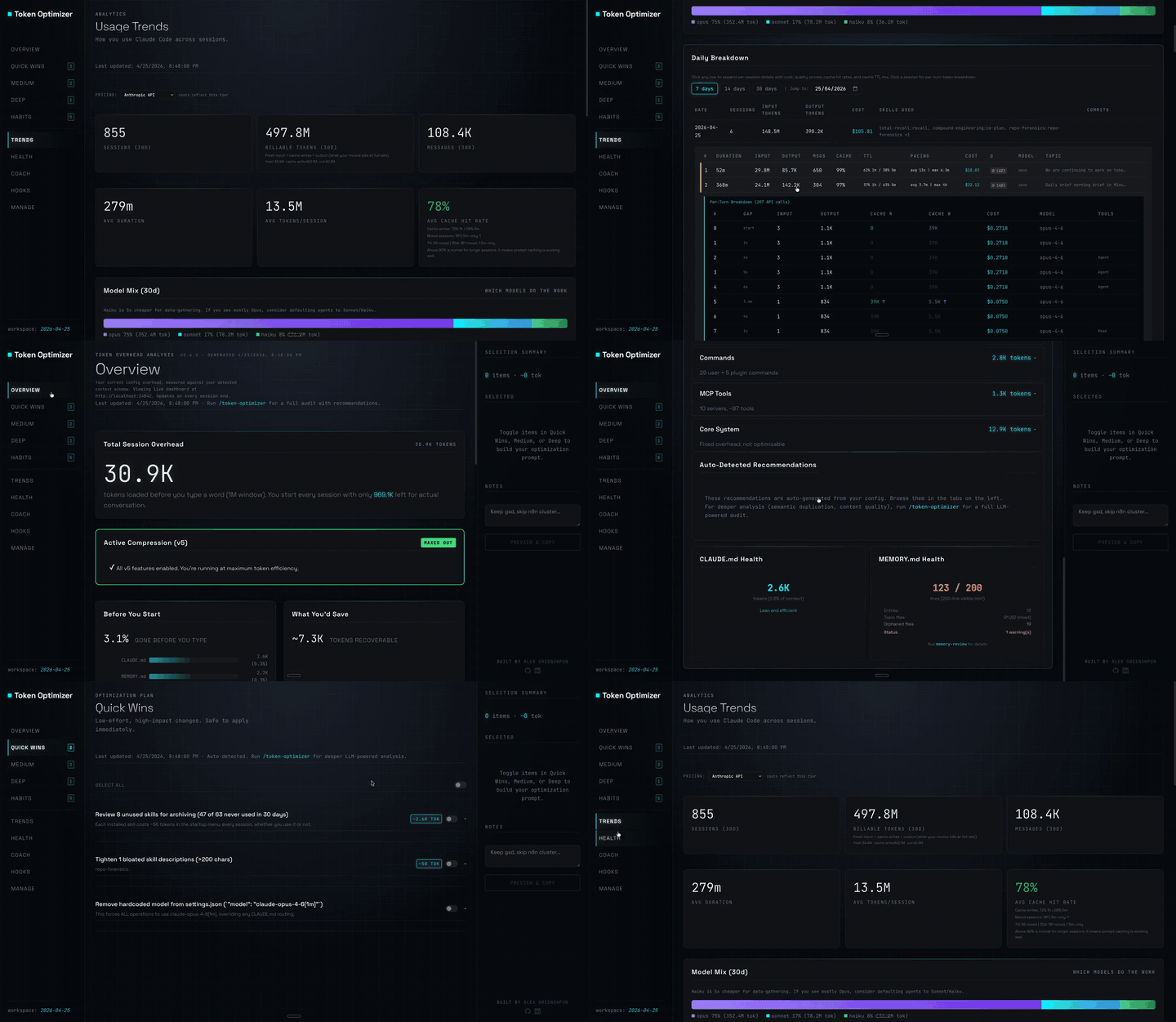
Claude Code 插件:压缩工具输出、在压缩前创建检查点、评估上下文质量,并在本地面板报告 token/成本节省;附带 hooks 和本地主机守护进程。

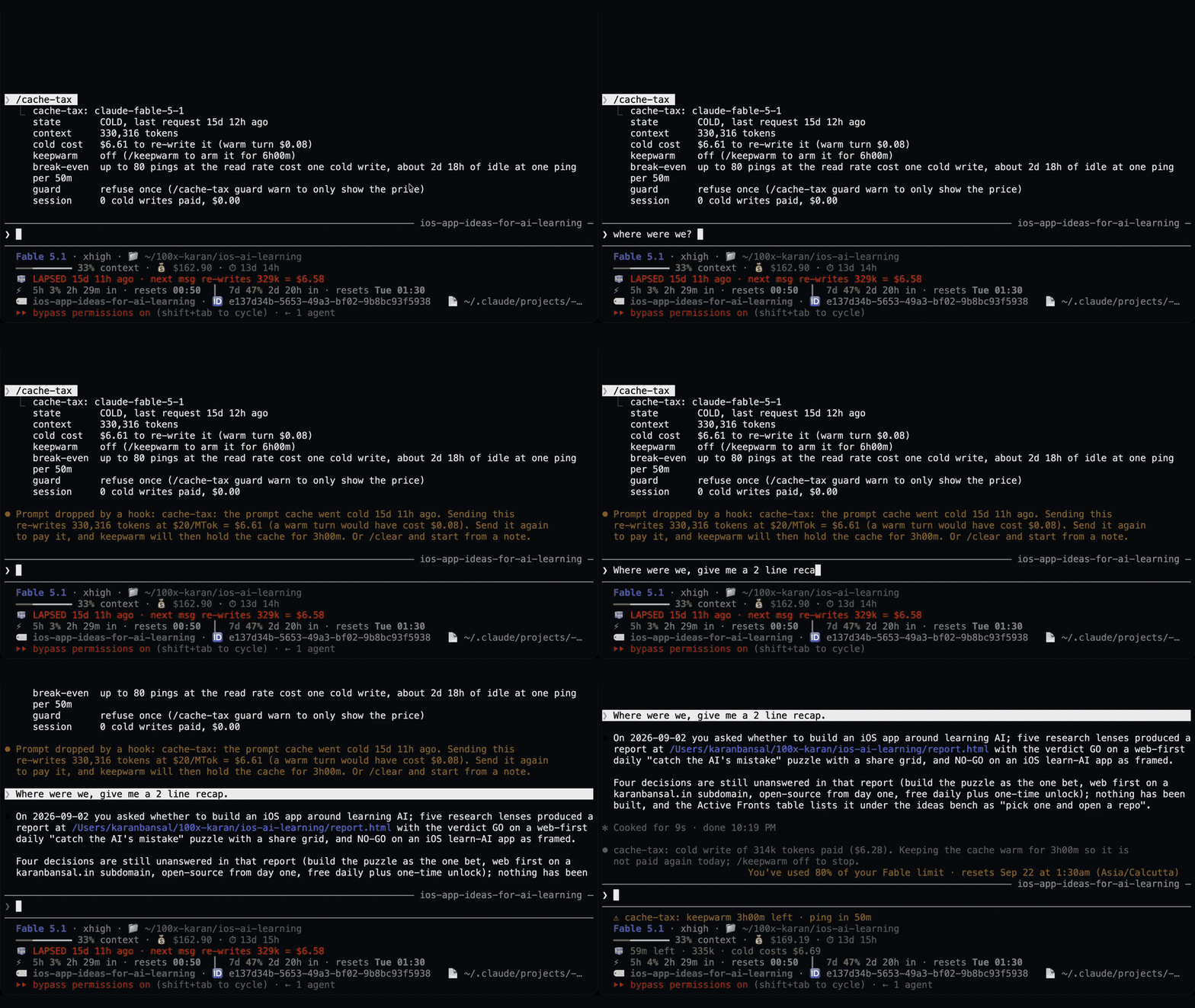
一个 Claude Code mod,用静默 ping 保持空闲会话的提示缓存温热,然后在缓存仍然温热时压缩大型会话一次。
Claude Code 插件在休息期间保持一小时提示缓存温热,并在冷缓存发送前显示一次预计重写成本。预热会使用模型请求并消耗 token。需要 Claude Code 2.1.287+。