NotTahaAli@NotTahaAli
NotTahaAli/sessclone/tree/main/packages/plugin
token、モデル、コストの使用量を SessClone デプロイメントへ報告する Claude Code プラグインです。ステータスバー、スラッシュコマンド、オプトインのトランスクリプトアップロードを提供します。
NotTahaAli/sessclone/tree/main/packages/plugin
SessClone Collector は Claude Code の使用状況(token、モデル、コスト入力、タイミング)を SessClone デプロイメントへ報告し、個人や組織が人、Project、Device、Session ごとの支出を確認できるようにします。SessionStart、Stop、StopFailure、SessionEnd の hooks、ステータスバーの行、/sessclone-status と /sessclone-sync のコマンドを含み、mod には /sessclone:status と /sessclone:sync へのフォールバックもあります。各ターンでは bearer key 付きのメタデータだけを HTTPS で送信します。オプトインのトランスクリプトアップロードを有効にしない限り、プロンプト、返信、ファイル内容は送信されません。Node 22.18+(または 23.6+、24)が必要です。MIT ライセンスです。
まず作者の README で marketplace とプラグイン名を確認してください。コマンドはリポジトリの構成によって変わる場合があります。
claude plugin marketplace add NotTahaAli/sessclone
claude plugin install sessclone
The SessClone Collector. It reports your Claude Code usage (tokens, models, cost inputs, timings) to a SessClone deployment, so you and your Org can see spend per person, Project, Device and Session on the dashboard.
/plugin marketplace add NotTahaAli/sessclone
/plugin install sessclone@sessclone
Claude Code asks for two things, both optional:
settings.json. Leave it empty in a Claude Code
cloud environment whose SessClone API credential adds it.https://sessclone.com. Self-hosted deployments enter their own address.Restart Claude Code. The next session says whether it connected, and which Org it reports to. Turns from before the install are backfilled from the transcripts Claude Code still keeps.
Requires Node 22.18 or newer (or 23.6+, or 24).
/sessclone-status shows what the last session start found: the
deployment, the key's first three characters and length, whether it was
accepted and for which Org, plus this Device, how many of this session's
Turns are not sent yet, what is waiting to send and the last push./sessclone-sync sends everything waiting now, without a Claude turn, and
says what it sent.↗,
which opens this session in the dashboard.These are the plugin's mod (hooks/register.tsx), which needs Claude Code
2.1.287 or newer. Where mods cannot load, /sessclone:status and
/sessclone:sync do the same, except that status leaves out this session's
unsent Turns, and sync is carried out by the hook that ends that turn.
Everything goes over HTTPS to the deployment URL above, with your key as a bearer token, except the opt-in transcript upload described last.
SessionStart): GET /api/ingest to ask whether the key
is accepted and for which Org. If it is not, the plugin says so and sends
nothing else until a session starts with a key that is. Then it re-sends
what an earlier session could not (POST /api/ingest).Stop): POST /api/ingest with, per Turn, the token counts
by kind, the model, timings, the Session, Project and Device it belongs to,
the working directory, the git branch, and the git remote reduced to a
Project key. No prompt, no reply, no file contents.StopFailure, SessionEnd): POST /api/ingest saying
that a turn ended on an API error, or that a session ended.POST /api/logs/presign), uploads the
compressed transcript to that URL, which is the deployment's object storage
(Supabase Storage for the hosted service), and confirms it
(POST /api/logs/confirm). Your Org's retention removes it.~/.claude/projects/ (or
CLAUDE_CONFIG_DIR), from a cursor, so each turn costs a few hundred bytes.git in the session's working directory, to read the branch and remote.~/.local/state/sessclone, ~/Library/Application Support/sessclone, or
%LOCALAPPDATA%\sessclone).HTTPS_PROXY is set, each hook restarts itself once under Node's own
proxy support so its requests go through that proxy.The API key is read only from the plugin's setup prompt, never from your shell environment, and never written to a log, a file or a transcript.
| Setting | Where | Default |
| ------------------- | ----------------------------- | ------------------------ |
| API key | setup prompt (api_key) | none, optional in cloud |
| Deployment URL | setup prompt, SESSCLONE_URL | https://sessclone.com |
| State directory | SESSCLONE_STATE_DIR | per platform, see above |
| Device name | SESSCLONE_DEVICE | derived from the machine |
| Print hook failures | SESSCLONE_DEBUG=1 | off |
To change an answer, run /plugin configure sessclone and start a new session.
Readable source, no build step: the hooks in hooks/ run as node <file>.mjs
and import the modules in src/. MIT licensed, see LICENSE. Project home and
issues: https://github.com/NotTahaAli/sessclone

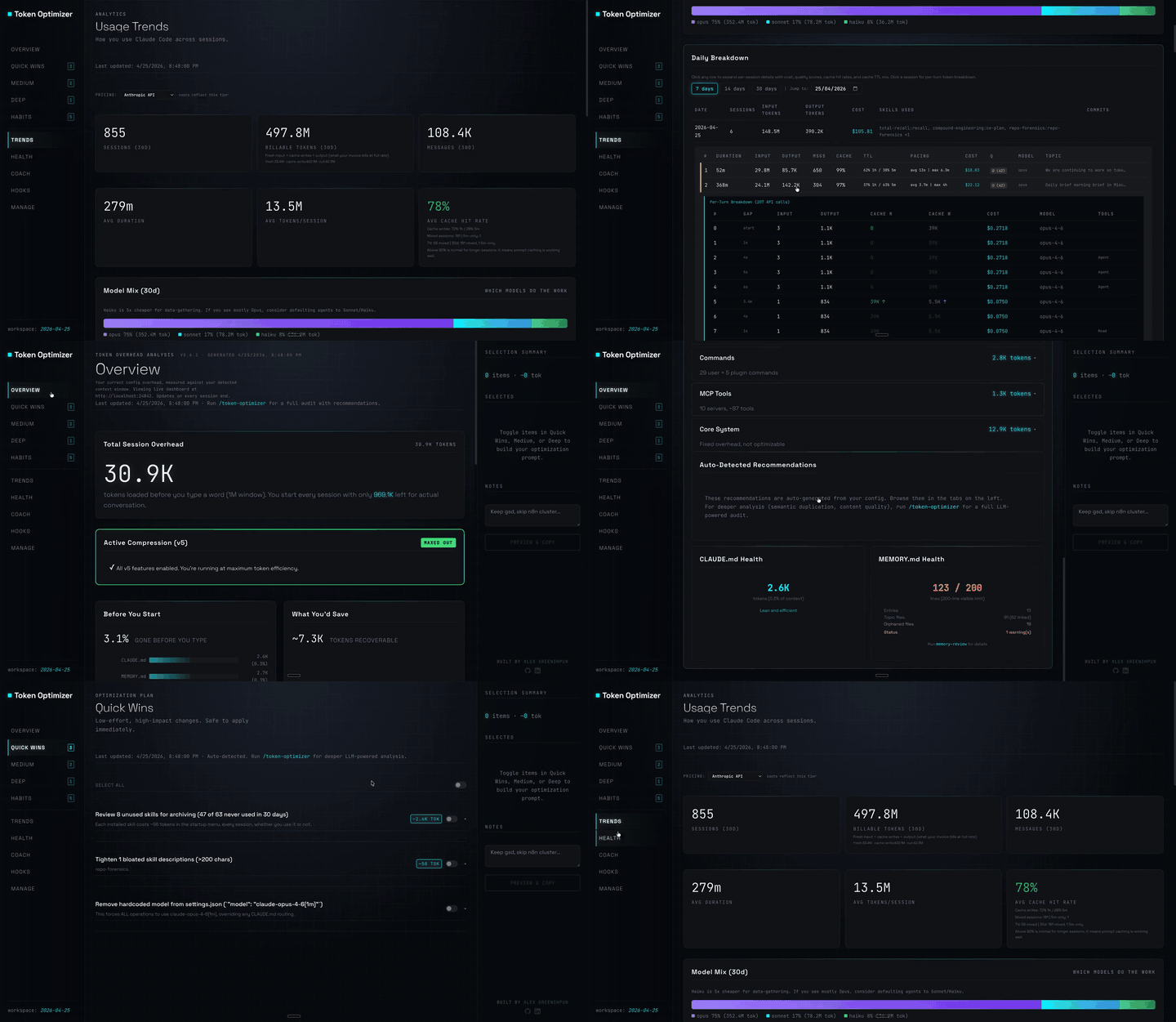
ツール出力を圧縮し、コンパクション前にチェックポイントを作成し、コンテキスト品質を採点して、ローカルダッシュボードに token/コスト削減を表示する Claude Code プラグインです。hooks と localhost デーモンも含みます。

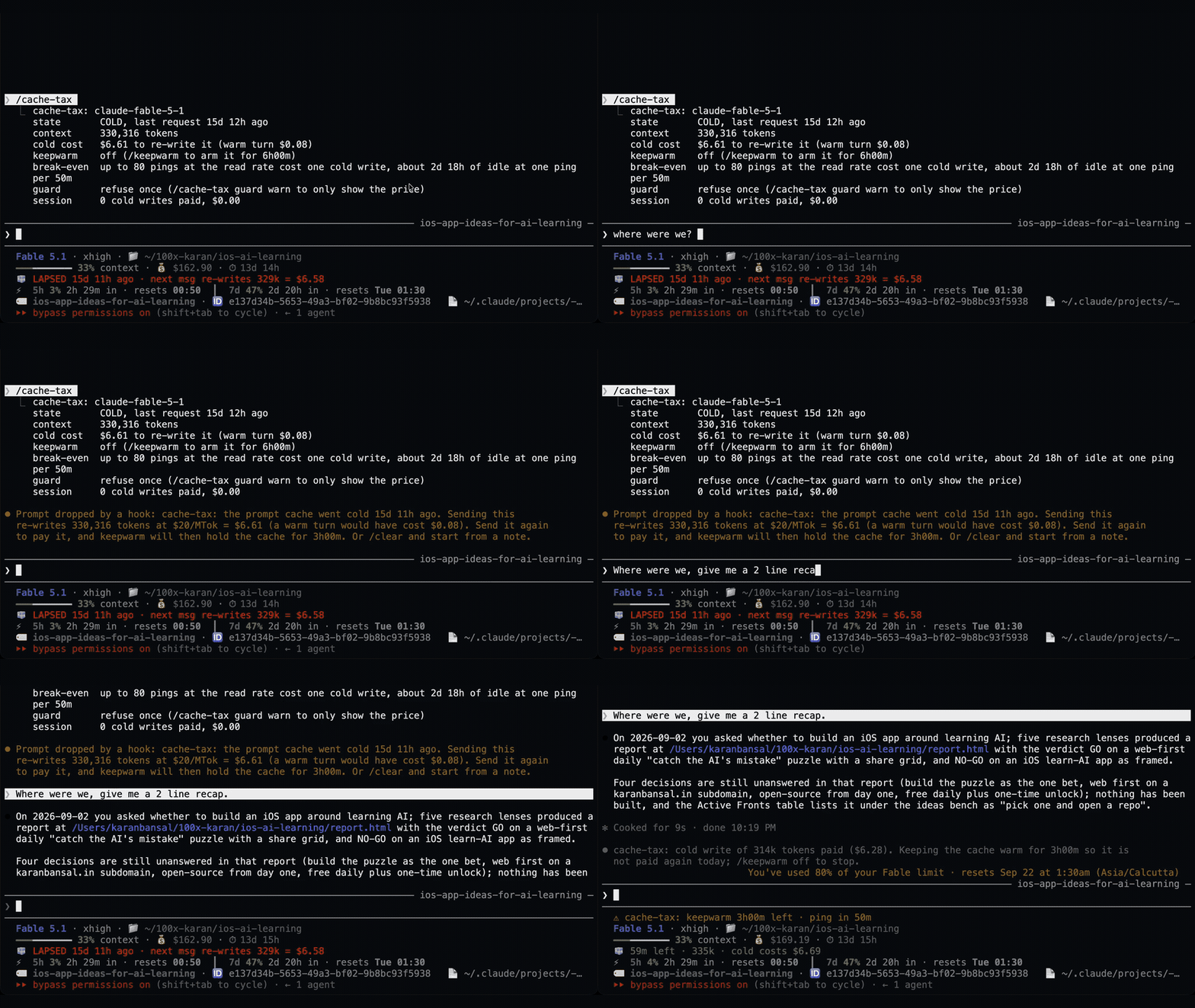
無操作のセッションのプロンプトキャッシュをサイレントな ping で温め、キャッシュが温かいうちに大きなセッションを 1 回だけ圧縮する Claude Code mod です。
休憩中も 1 時間のプロンプトキャッシュを温め、冷えた状態での送信を推定書き換えコストとともに一度止める Claude Code mod。ウォームアップはモデル要求を使い、トークンを消費します。Claude Code 2.1.287+ が必要です。